

10 Incredible Waterfalls in Iceland Beyond the Usual Stops
This post may contain affiliate links. If you make a purchase through one of these links, I may earn a small commission at no additional cost to you.
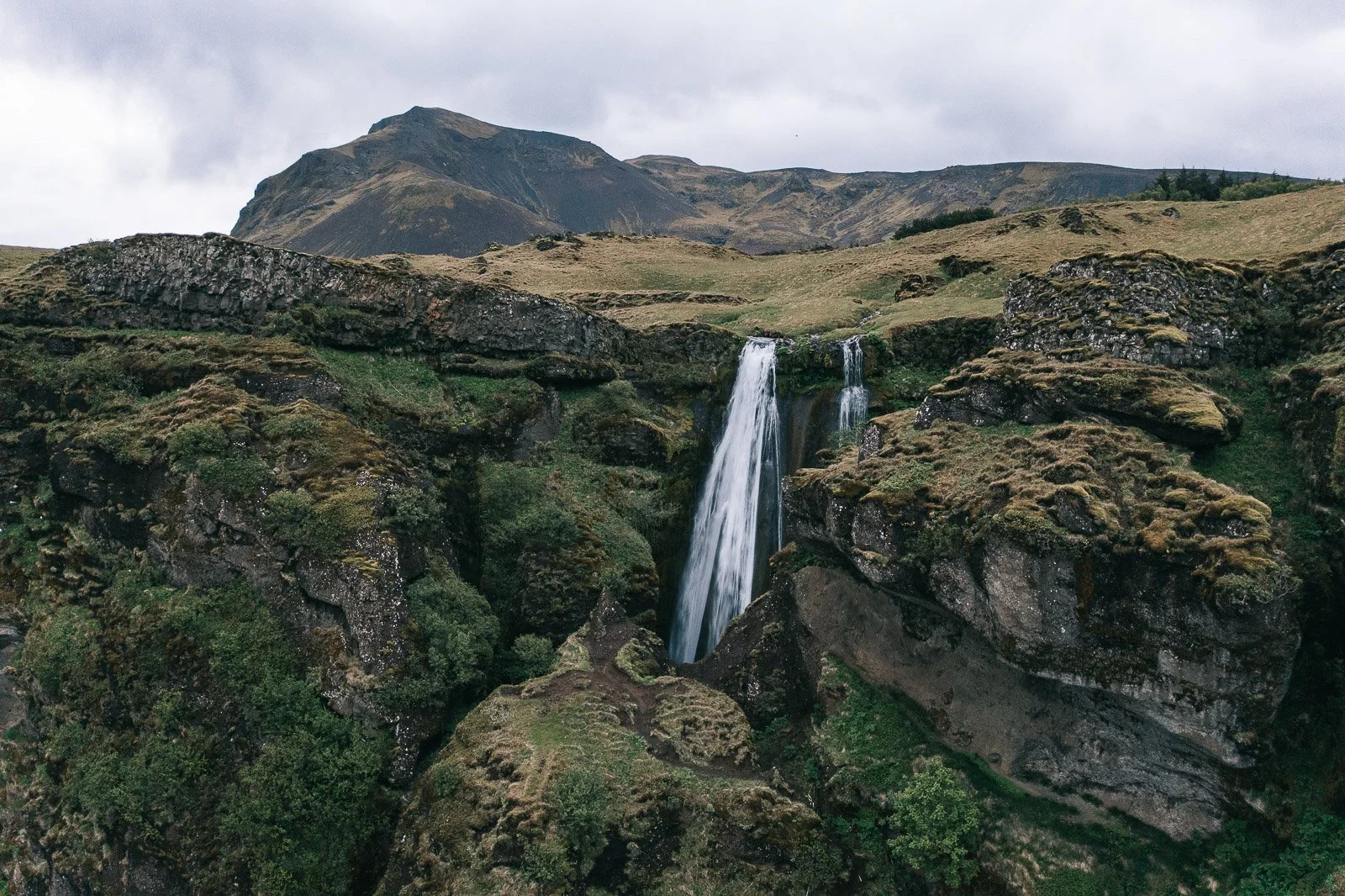
Iceland has no shortage of waterfalls. You would think after driving past enough of them, I would eventually reach some kind of waterfall limit, but somehow that never seems to happen. Every time I think I've seen one of the best ones, another shows up around a corner looking completely different from the last.
Skógafoss, Seljalandsfoss, Gullfoss, and Goðafoss get most of the attention, and they absolutely deserve to be seen. This list is for when you want to go a little farther than the obvious stops. Some of these waterfalls are only a short walk away from places you're probably already visiting, while others require a rough road, a 4x4, or an actual hike to reach.
I also wouldn't call every waterfall on this list a secret anymore. A few have become much easier and more popular to visit over the years. They're here because I think they're worth adding to an Iceland trip, whether they're overlooked, unusually beautiful, harder to reach, or just different enough from the major waterfalls that they deserve their own stop.
And if you're wondering why almost every name ends in foss, it simply means waterfall in Icelandic. Once you notice it, you're going to see it everywhere.
At a Glance
Open the Waterfall Route in Google Maps.
Route note: This map is meant for trip planning, not as a single driving itinerary. Some waterfalls require seasonal F-road or rough-road access, so always check current road conditions, SafeTravel Iceland, and your rental vehicle restrictions before following the route.
1. Gljúfrabúi
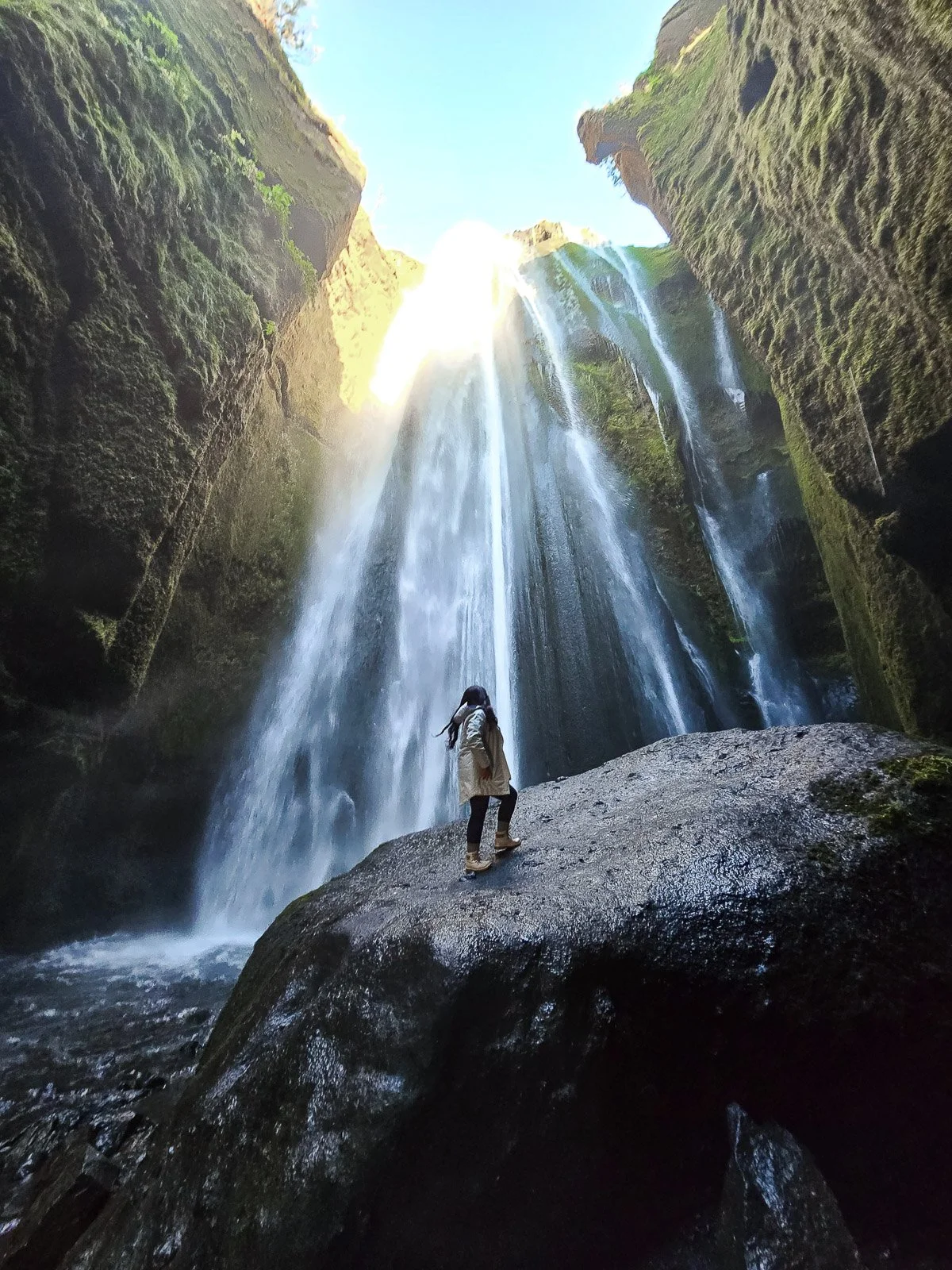
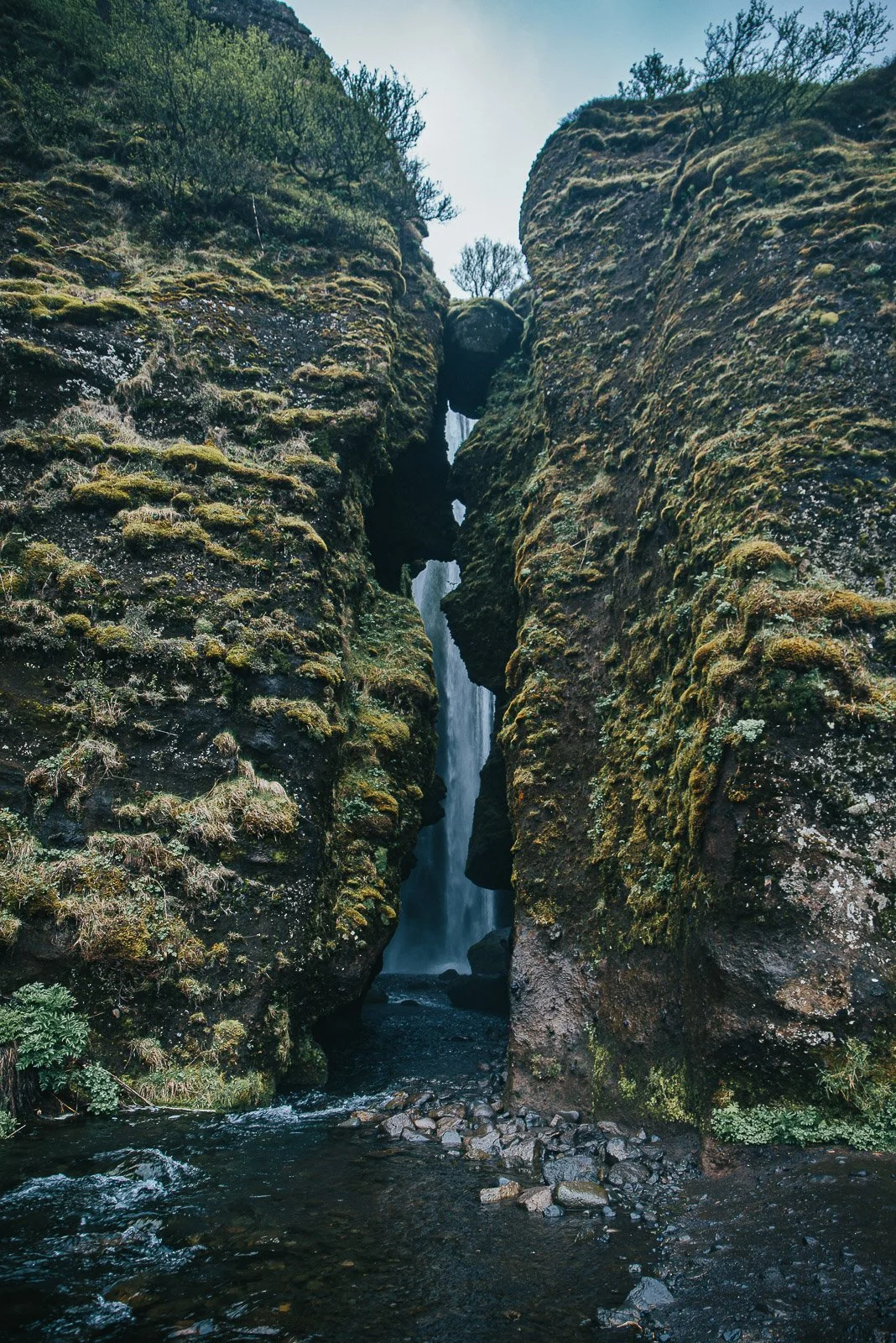
I'm starting with my favorite because apparently, I have no interest in saving the best for last. It is hard for me to choose a favorite anything, but Gljúfrabúi might actually be my favorite waterfall in Iceland.
The funny part is that it's sitting right next to one of the country's most famous waterfalls. Gljúfrabúi is just a short walk from Seljalandsfoss, but instead of being completely visible from the road, the roughly 40-meter waterfall is partially hidden inside a narrow gorge. You can see a little of it from outside, but the experience changes completely once you make your way into the opening.
Getting inside means following the stream through the narrow gap in the rock, and depending on the water level, you'll likely get wet. The rocks can also be incredibly slippery. Wear waterproof shoes and clothing, protect your camera, and don't be surprised if the mist absolutely soaks you once you're inside.
That is also part of what makes this one so much fun. You're not just parking, taking a picture, and leaving. You have to work your way into this little hidden space, and then suddenly there is a waterfall crashing down directly in front of you.
If you're already stopping at Seljalandsfoss, I would absolutely make time for Gljúfrabúi too.
2. Brúarfoss
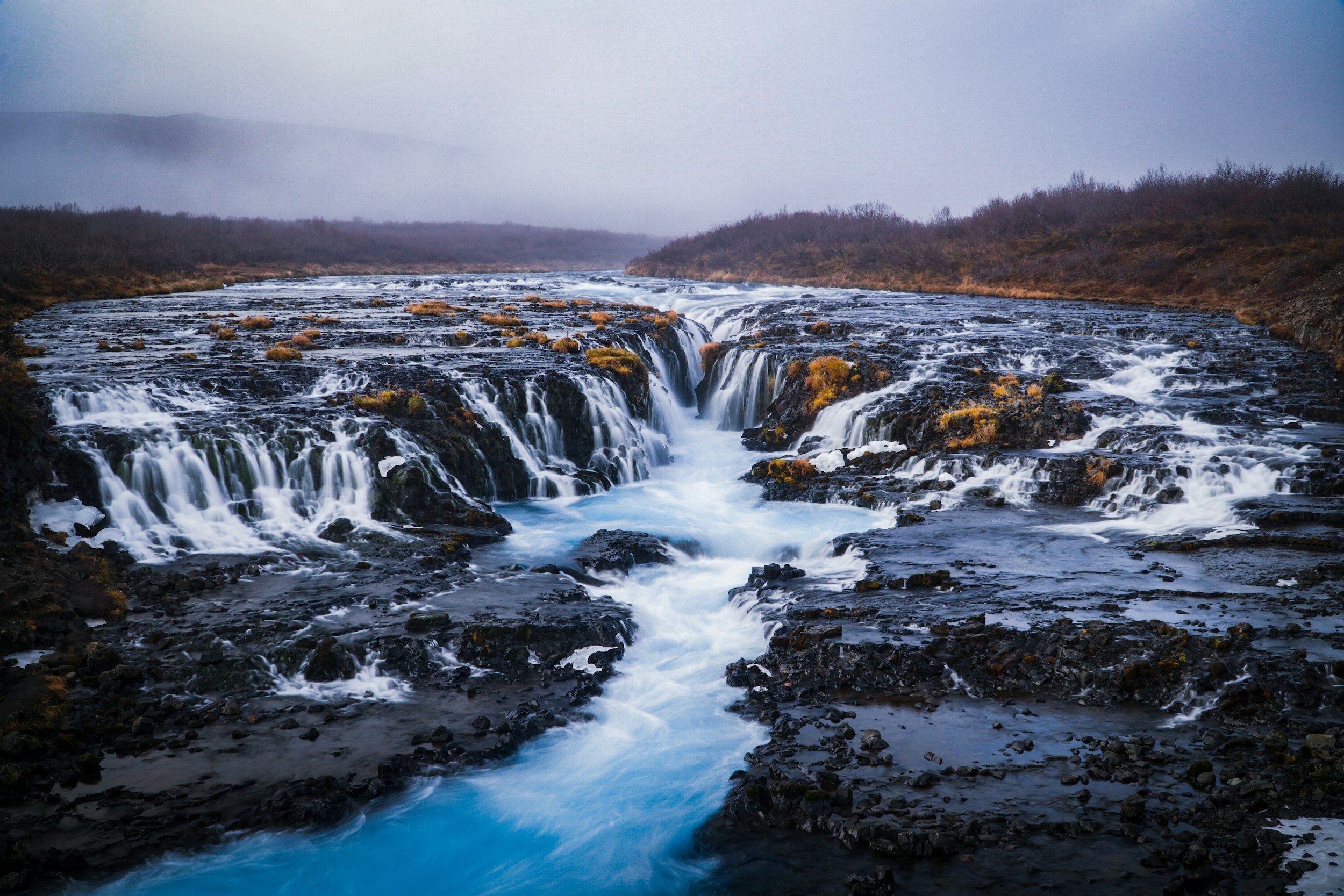
Brúarfoss is a perfect example of why I don't want to call everything on this list a hidden gem anymore. It used to take more effort to reach, but a dedicated parking area now puts you only about a five-minute walk from the waterfall. The parking area charges a service fee. There is also a longer walking route if you'd rather make more of a hike out of it.
What makes Brúarfoss worth the stop isn't its height. It is actually a relatively small waterfall. The thing you're coming for is the water, which can look almost impossibly blue as it funnels through the dark volcanic rock.
If you're driving the Golden Circle, this is a really easy waterfall to add without turning it into a major detour. It is also a great option if you want something visually completely different from Gullfoss.
If you have more time, the longer walking route is about 7 kilometers round trip and passes additional waterfalls along the way. If you're trying to fit a lot into one day, though, the newer parking area makes Brúarfoss one of the easiest waterfalls on this entire list to visit.
If you’re driving the Golden Circle, you can see how I would work Brúarfoss into the route in my Iceland’s Golden Circle: A Detailed Self-Drive Guide.
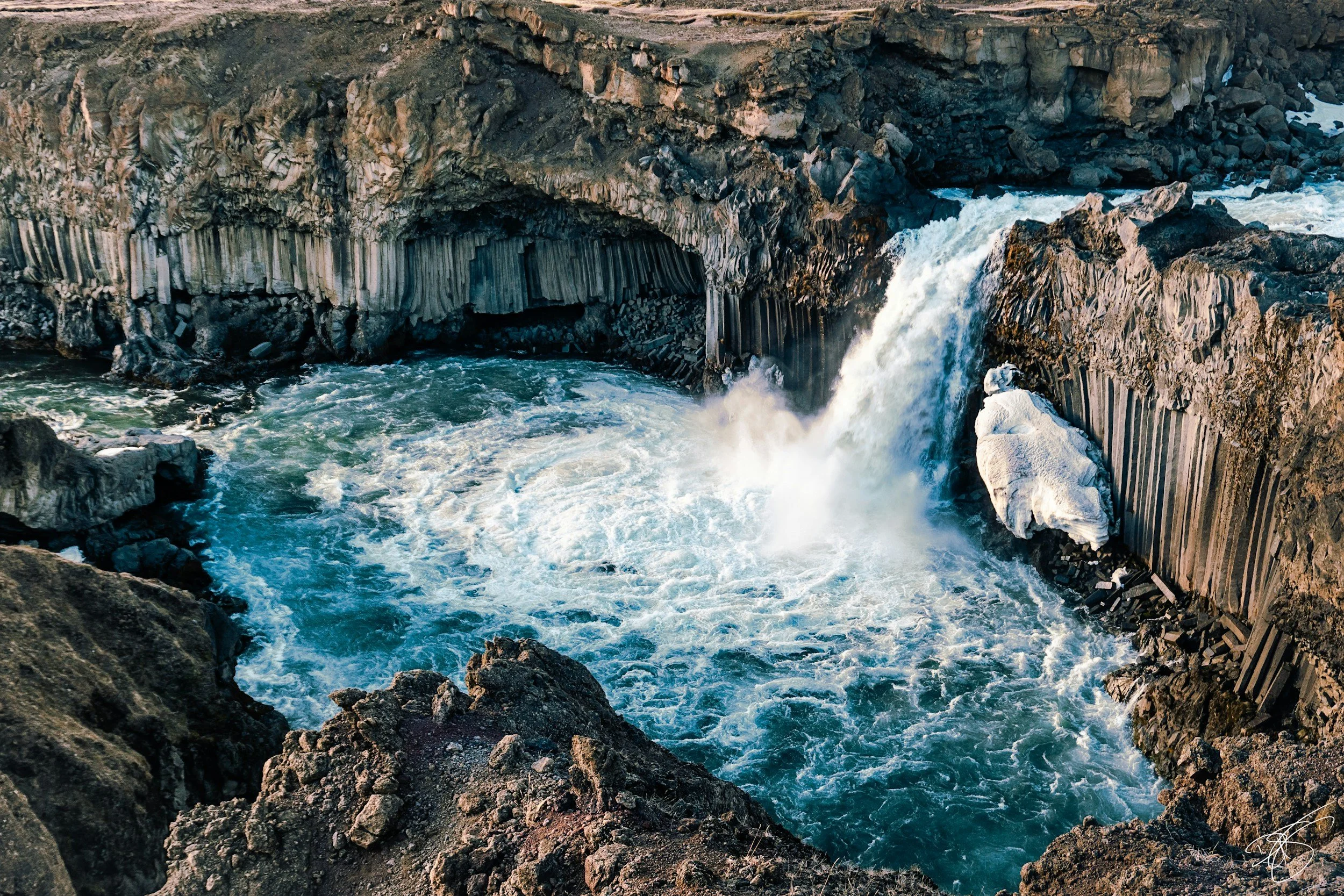
Aldeyjarfoss, Iceland
3. Aldeyjarfoss
Aldeyjarfoss is where this list starts getting considerably more adventurous.
The waterfall drops into a pool surrounded by dark basalt columns, and the entire setting looks almost too perfectly designed to be natural. Iceland has plenty of basalt formations, but there is something about the combination of the columns, bright water, and surrounding barren landscape here that makes Aldeyjarfoss stand out.
Getting there is the part you need to plan for. From the Goðafoss area, you head south through Bárðardalur before the route eventually continues onto F26 for the final portion toward the waterfall. That F-road section requires an appropriate 4x4 vehicle, and Highland road access is seasonal.
This is not somewhere I would blindly follow Google Maps and hope for the best. Check the current road status before you leave, make sure your rental is actually allowed on F-roads, and don't assume that because somebody drove it last week, the conditions will be the same when you get there.
If you have the right vehicle and the road is open, though, Aldeyjarfoss is absolutely worth the detour.
4. Hrafnabjargafoss
Once you've already made the trip to Aldeyjarfoss, this is the one I would add next.
Hrafnabjargafoss sits farther along the same general F26 route on the Skjálfandafljót River. It isn't especially tall, but that isn't really the point. The river spreads across a broad section of rock and splits around formations in the middle, giving it a completely different shape from the tall, narrow waterfalls you'll see throughout the South Coast.
The remote setting is a huge part of the appeal. This feels much farther removed from the normal Iceland sightseeing circuit, and there aren't the restaurants, large visitor centers, or tour buses that you find at some of the major stops.
That remoteness also means you need to take the drive seriously. Access continues along F26 beyond Aldeyjarfoss, so this is primarily a summer stop for travelers with an appropriate 4x4 and suitable road conditions. Check the current road status before heading out, and don't continue just because your GPS says the waterfall is there.
I would plan Aldeyjarfoss and Hrafnabjargafoss together rather than treating them as two completely separate detours.
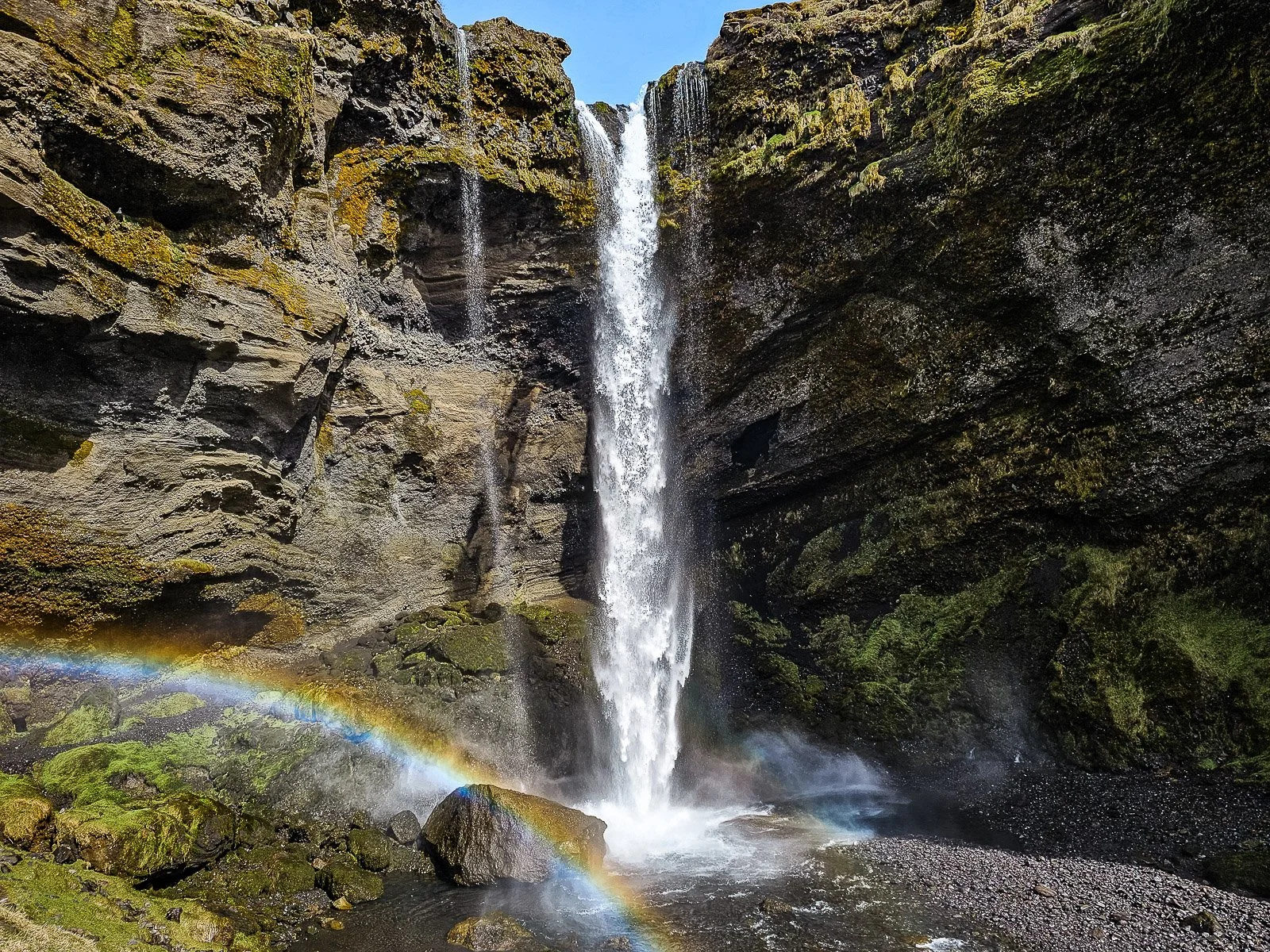
5. Kvernufoss
Kvernufoss is one of my favorite examples of how easy it can be to miss something incredible in Iceland simply because a more famous attraction is sitting next door.
It's near Skógafoss, but instead of being visible from the Ring Road, Kvernufoss is tucked into a narrow gorge behind the Skógar Museum. The walk is short, roughly 20 minutes each way depending on your pace, and the path leads gradually into the canyon until the waterfall finally comes into view. Current visitor information directs hikers to start around the Skógar Museum parking area, where a parking charge may apply.
One of the best parts is that, when conditions allow, you can follow the path behind the waterfall. It gives you a similar experience to walking behind Seljalandsfoss but in a much smaller, more enclosed setting.
The area behind the waterfall can be extremely wet and slippery, and winter ice can make it unsafe, so don't treat the fact that there's a path as a guarantee that you should use it that day.
If you're visiting Skógafoss anyway, I think this is one of the easiest worthwhile additions you can make to a South Coast day.
6. Hestavaðsfoss
Most people walk up the giant staircase beside Skógafoss, reach the viewpoint at the top, take a few pictures, and turn around.
You don't have to.
The trail continues upstream along the Skógá River as part of the beginning of the Fimmvörðuháls route, and once you keep walking, you start passing waterfall after waterfall. Hestavaðsfoss is the first named waterfall after Skógafoss, but it is really your introduction to the entire series along what is often called the Waterfall Way. The route between Skógar and the footbridge farther upstream includes more than 20 waterfalls and rapids, both named and unnamed.
You definitely do not need to hike the entire Fimmvörðuháls trail to make this worthwhile. Even continuing a relatively short distance beyond the Skógafoss viewpoint gets you away from a lot of the crowd and gives you a completely different perspective on the area.
If you have some extra time at Skógafoss and the weather is good, don't automatically turn around at the top of the stairs. Keep walking.
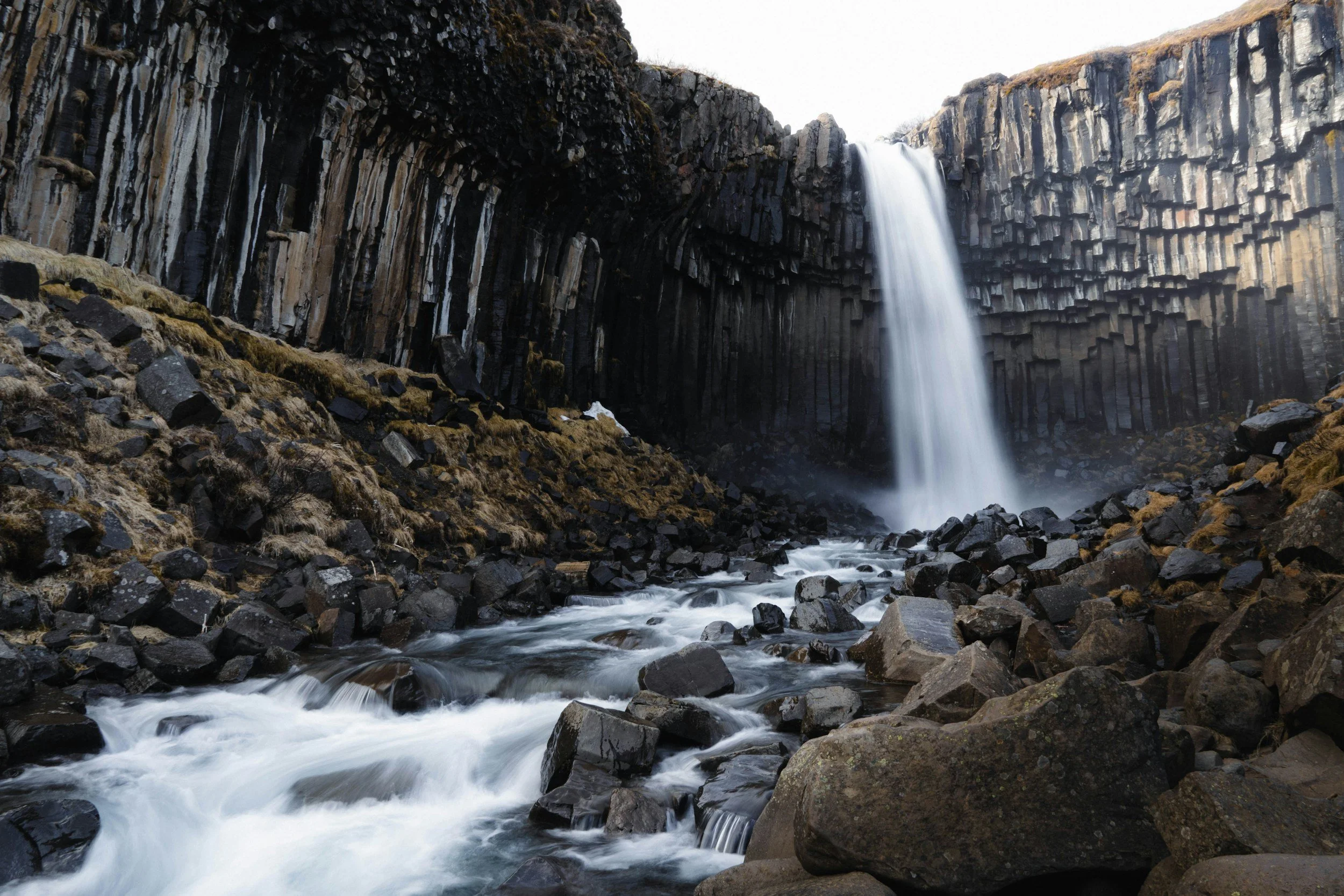
7. Svartifoss
Svartifoss is definitely not a secret, but I am keeping it on this list because it looks unlike almost every other waterfall in Iceland.
Located in Skaftafell, the waterfall is framed by dark basalt columns that create an almost geometric wall around it. It is one of the most recognizable waterfalls in the area, and unlike many Icelandic waterfalls, where you can basically step out of your car and immediately see them, you have to hike to this one.
The official S2 route through Skaftafell is a 5.8-kilometer loop that takes around two hours and includes Svartifoss along with additional scenery and viewpoints. The national park lists the route as easy, although it still involves about 250 meters of elevation gain and can become slippery in wet or winter conditions.
If you're short on time, you don't necessarily have to complete every longer loop in Skaftafell just to see the waterfall. Either way, check the current trail information before you start, as weather, snow, ice, maintenance, and temporary trail closures can affect access.
Skaftafell also charges a service fee at its parking area, so I would check the current rate when planning your visit rather than entering a fixed price in this article.
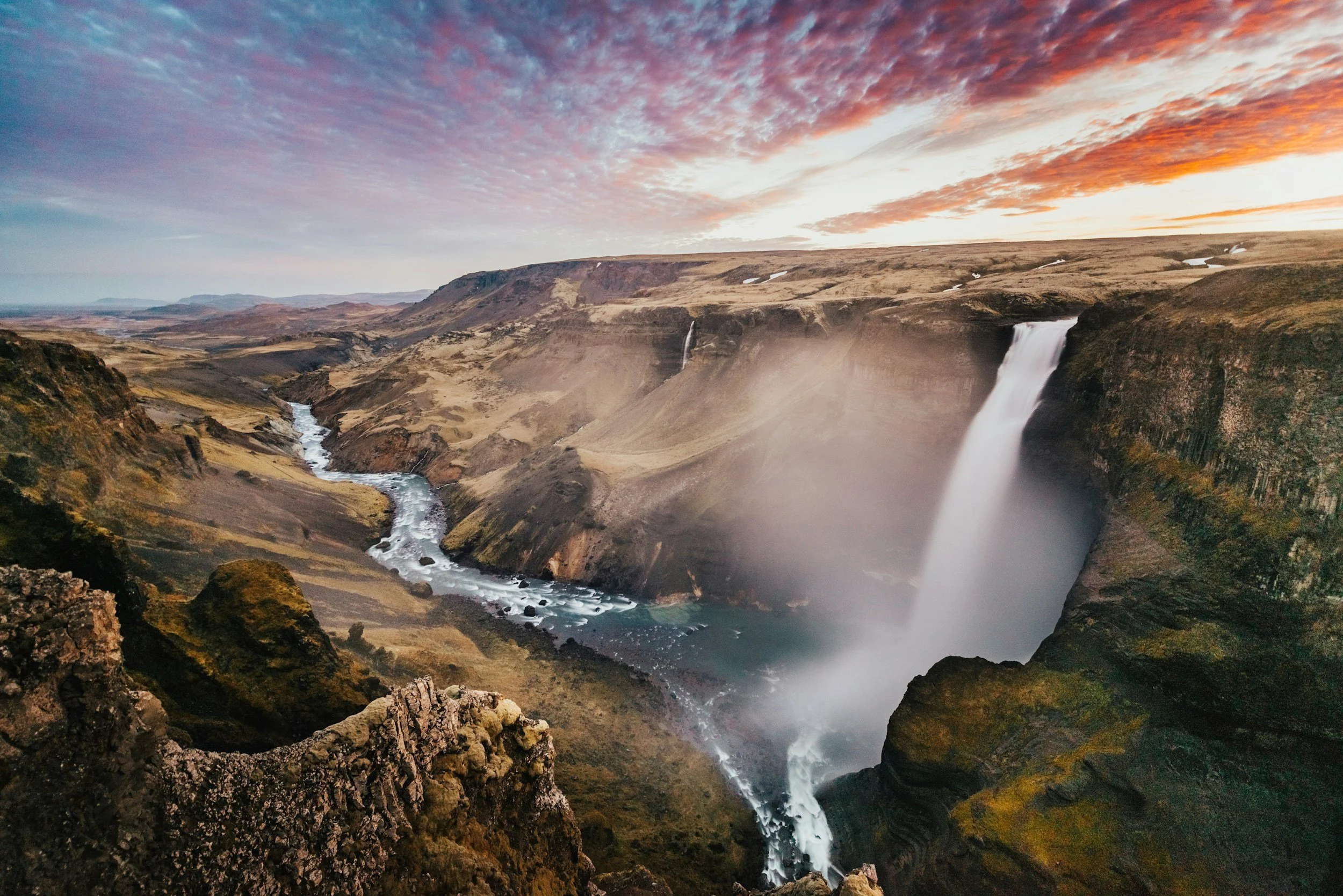
8. Háifoss
Háifoss is one of those places where the drive makes you wonder whether you have made a terrible decision, and then you finally get there and understand why people keep going.
The waterfall drops about 122 meters into a dramatic canyon, and one of the coolest parts is that you're actually getting two waterfalls in the same view. Granni drops into the canyon nearby, so from the upper viewpoints you can photograph both falls and the enormous valley around them.
The important part here is the road. Háifoss is reached by Road 332. It is not an F-road, but that does not mean you should treat it like a normal paved road. The final stretch is unpaved and can become very rough, with conditions varying throughout the season. I would personally be much more comfortable doing this in a high-clearance 4x4, and you should check both current road conditions and your rental company's rules before attempting it.
There is also an alternative if you want to turn the visit into a real hike. From the reconstructed farm at Stöng, it is possible to hike along the Fossá toward Háifoss, about 6 kilometers each way.
Whichever way you get there, stay well back from the canyon edge. This is one of those places where the landscape is huge enough that you do not need to stand on the very edge to get the photo.
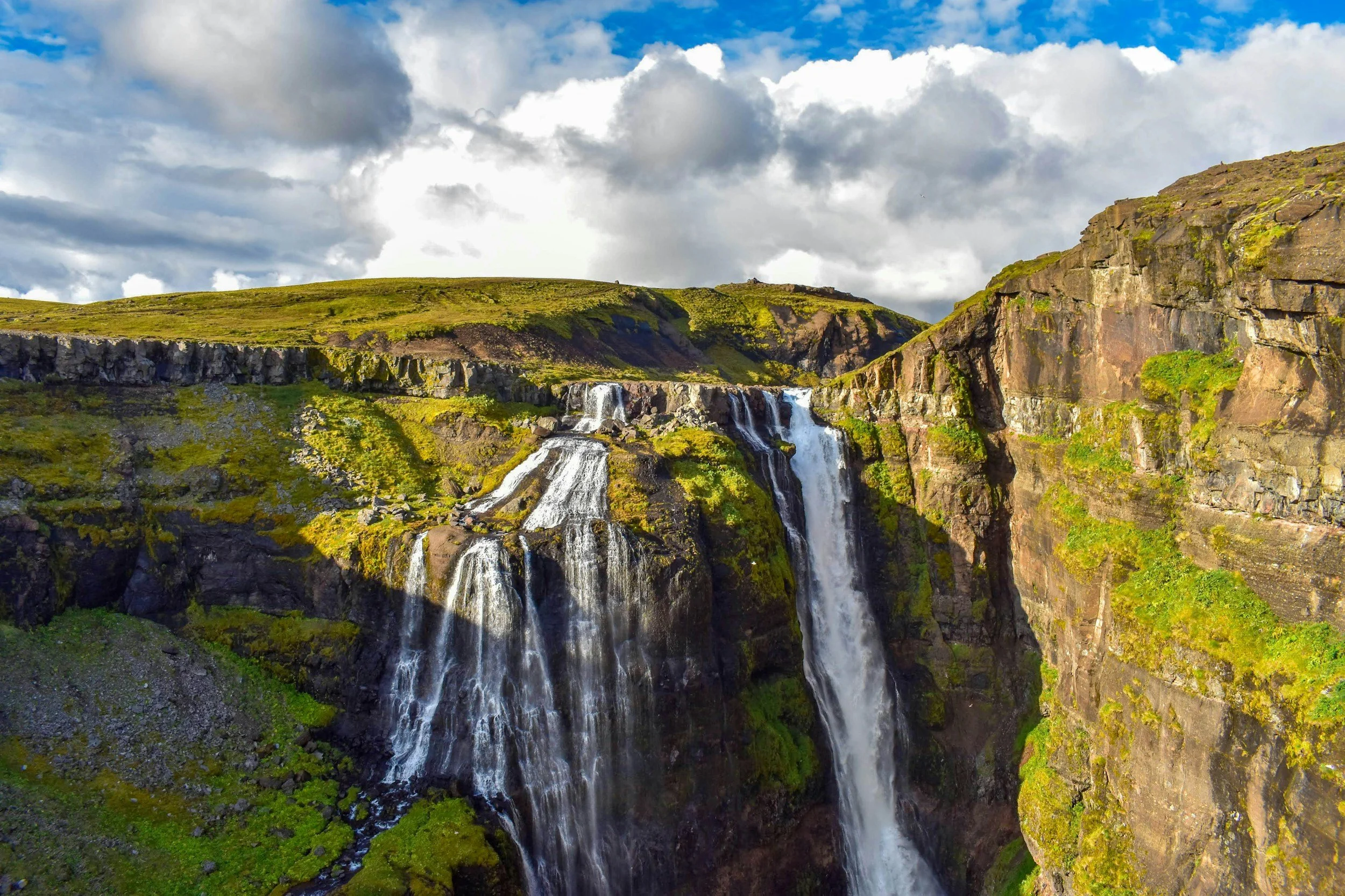
9. Glymur
Glymur is the waterfall on this list that requires the most commitment on foot.
At roughly 198 meters tall, it drops deep into a narrow canyon in Hvalfjörður, and you do not simply drive to a lookout and see the whole thing. Getting the experience means hiking for it. Visit West Iceland currently estimates the hike at around three to four hours and specifically warns that winter conditions can make the route dangerous.
The route includes steep sections and loose terrain, and the typical summer route involves crossing the Botnsá using a seasonal log crossing. That crossing should never be assumed to be available just because you've seen it in photos. Outside the appropriate season or when the river is high, conditions can change the route considerably.
Basically, don't add Glymur to your itinerary like it's a 20-minute roadside stop. Give yourself several hours, bring proper hiking shoes, check conditions before you go, and be comfortable turning around if the trail or river crossing isn't safe.
The extra effort is exactly what makes this one so memorable. You're not just hiking to a waterfall. You're walking through one of the most dramatic canyons in West Iceland, with the view gradually opening up as you climb.
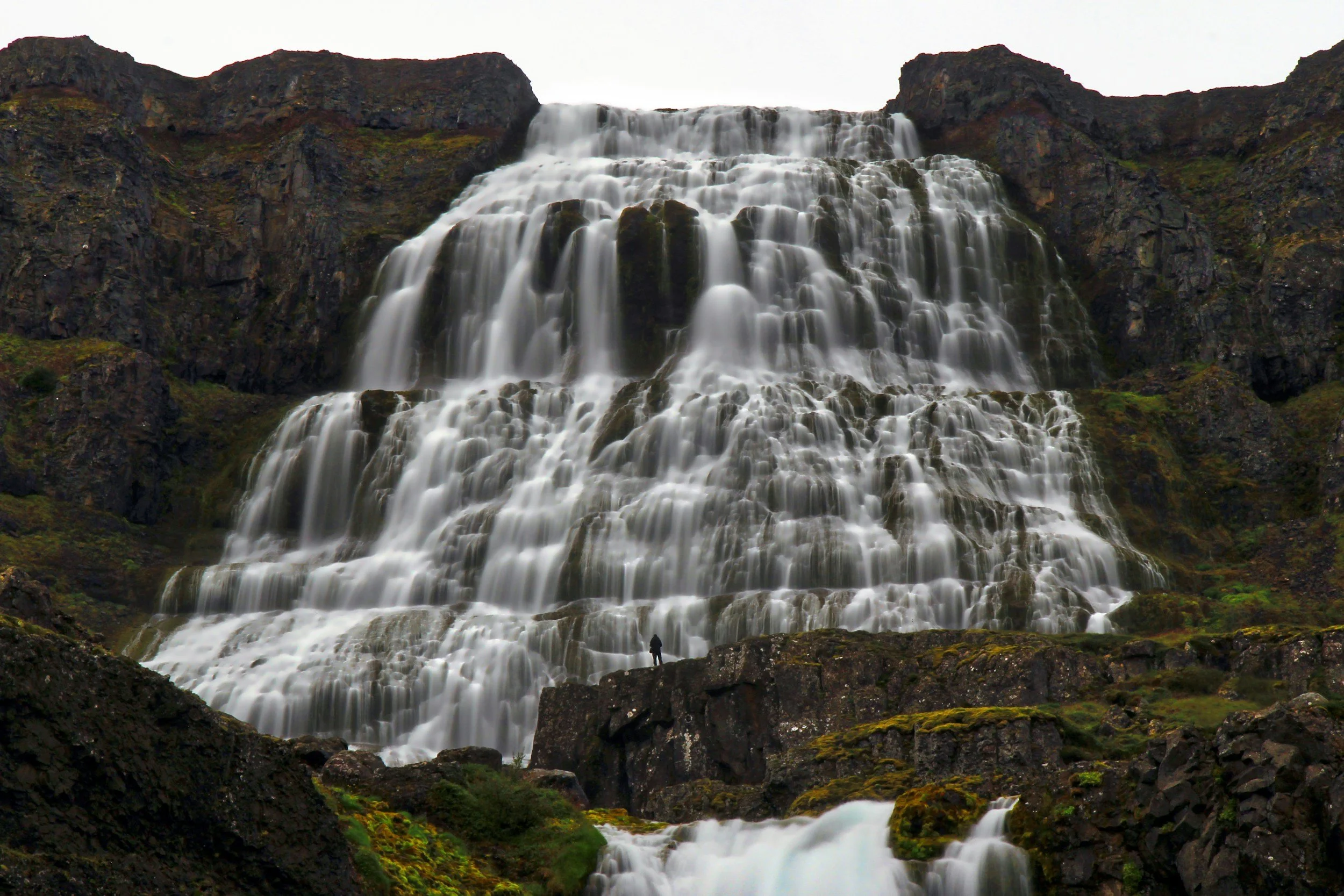
10. Dynjandi
I started with my favorite, so I might as well finish with the one that comes closest to taking its place.
Dynjandi is enormous, but what makes it so impressive isn't just the height. The main cascade spreads out across the mountainside in a huge fan shape, and as you walk toward it, you pass smaller waterfalls along the river before reaching the upper section.
The main cascade drops approximately 100 meters, and the walk from the parking area to the upper waterfall takes about 15 minutes. I would allow at least 45 to 60 minutes for the entire stop so you have time to walk past the smaller waterfalls, actually enjoy the view, and take photographs instead of immediately turning around.
Dynjandi is in the Westfjords, so the hike isn't the biggest time commitment here. Getting to Dynjandi is. If you're already traveling through the Westfjords, I would absolutely make it a priority. I wouldn't try to squeeze it into an itinerary that doesn't otherwise go anywhere near this part of Iceland.
The site now has designated parking, toilets, and a parking service fee, and the waterfall and surrounding area are protected as a natural monument. Road and weather conditions in the Westfjords can still change quickly, so this is another place where I would check conditions before heading out rather than relying entirely on your original itinerary.
It is one of those waterfalls where photographs don't really communicate how large the whole thing feels when you're standing underneath it.
Which Iceland Waterfalls Would I Prioritize?
If this is your first trip to Iceland and you're already driving the South Coast, I would make Gljúfrabúi and Kvernufoss the easiest additions. Both are close to famous stops you're probably already visiting, but they feel completely different from their better-known neighbors.
If you have a suitable 4x4 and you're traveling through North Iceland in summer, Aldeyjarfoss and Hrafnabjargafoss make a great pair because you're already committing to the same remote drive.
If you specifically want a hike rather than another sightseeing stop, choose Glymur. And if you're traveling through the Westfjords, I would have a very difficult time recommending that you skip Dynjandi.
There really isn't one waterfall on this list that replaces another. That's probably why I never seem to get sick of them. One is hidden inside a gorge, another is surrounded by basalt columns, another requires hours of hiking, and another is sitting five minutes from a parking lot with water so blue that it barely looks real.
You could spend an entire Iceland trip chasing waterfalls and still come home with another list of ones you didn't get to see.
If you’re trying to fit several of these stops into a short trip, my 3 Days in Iceland: The Ultimate Golden Circle & South Coast Road Trip shows how I would combine some of them into a realistic itinerary.
Final Thoughts
One of my favorite things about road-tripping around Iceland is that some of the places I remember most weren't necessarily the giant attractions I had planned the entire trip around. Sometimes it was the waterfall a few minutes beyond the crowded one, the trail I almost didn't keep walking, or the road that felt like it was taking me absolutely nowhere until something incredible appeared at the end.
These 10 waterfalls range from very easy stops to places that require considerably more planning, so I wouldn't try to force all of them into one trip. Pick the ones that make sense for the part of Iceland you're already exploring, leave yourself enough time to actually enjoy them, and always check current road and trail conditions before heading somewhere remote.
And if you make it to Gljúfrabúi, prepare to get wet. I warned you.
If you’re planning the rest of your trip, you can find all of my Iceland travel guides in one place.
Happy travels!





Want to visit the real Hocus Pocus filming locations? Follow this self-guided tour through Salem and nearby Marblehead to see Allison's house, Max and Dani's house, their school, Old Town Hall, Pioneer Village, Old Burial Hill, and more.