

Iceland’s Golden Circle: A Detailed Self-Drive Guide
This post may contain affiliate links. There is a chance that I might receive a commission for purchases made through these links at no cost to you, of course!
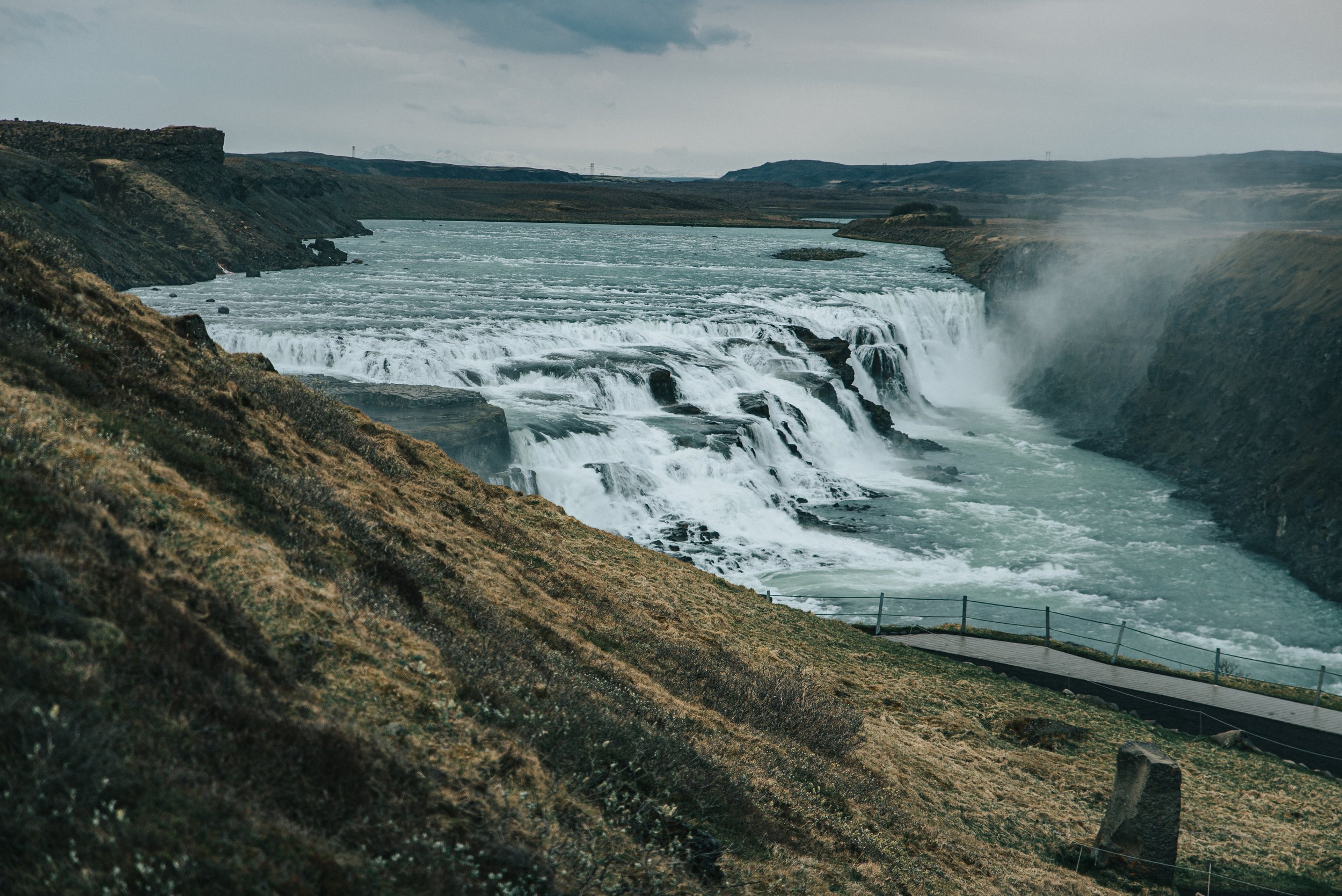
The Golden Circle is one of Iceland’s most popular scenic routes and one of the easiest ways to experience several of the country’s incredible landscapes in a single day. The classic route connects Þingvellir National Park, the Geysir Geothermal Area, and Gullfoss, with plenty of additional stops worth considering along the way. Whether you have one day in Iceland or are using the Golden Circle to start a longer South Coast road trip, this guide will help you decide where to stop, how much time to allow, what it costs, and what is actually worth your time.
At a Glance
Summary
What is the Golden Circle in Iceland?
When is the best time to visit?
How long does it take to drive the Golden Circle?
Can I do the Golden Circle as a day trip from Reykjavik?
Now that I’m here, what do I do?
Map
Locations
Thingvellir National Park
Geysir Geothermal Area
Gullfoss
Additional Sights
Faxifoss
Kerið (Kerid) Crater

Iceland’s Golden Circle
What is the Golden Circle in Iceland?
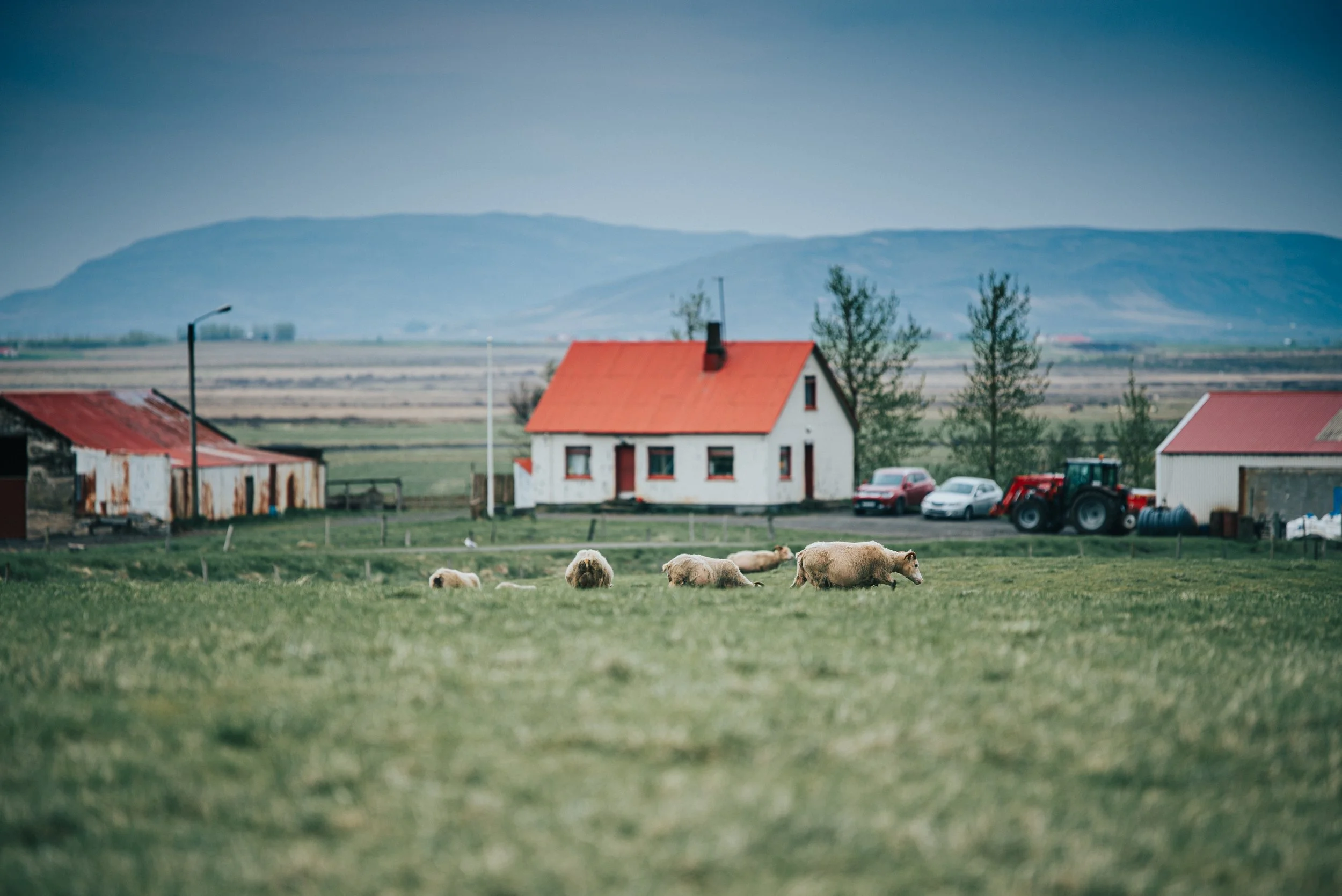
The Golden Circle is a popular circular route in southern Iceland. It gets its name from Gullfoss, one of the major waterfalls you will see while visiting. It is one of the most popular day tours from Reykjavik and can be done as a solo self-drive road trip or with an organized tour. The route stretches about 143 to 155 miles (230 to 250 km) and starts and ends in Reykjavik. You will find that many travelers flock to the Golden Circle for its proximity to the capital and the fact that many of Iceland’s top sights and attractions are here! Whether you are on a long trip or a quick one like this one, I would recommend the Golden Circle to anyone visiting Iceland.
When is the best time to visit?
Any time of the year! All seasons are beautifully different.
Summer is the easiest time to drive the Golden Circle, especially for first-time visitors. You have long daylight hours and generally easier road conditions, which gives you much more flexibility when fitting several stops into one day.
The Golden Circle can also be driven during fall, winter, and spring, but Icelandic weather can change quickly. Winter conditions can also occur outside of the traditional winter months, so always check current road and weather conditions before leaving.
SafeTravel specifically warns that winter-like road conditions can occur in spring and fall as well as winter, and recommends checking conditions throughout the day.
However, don’t let this deter you from exploring other times of the year. There is just as much magic in the winter, like the chance to see northern lights! (Click here for tips to see them) No matter the time of year, make sure to keep your itinerary flexible and keep an eye on the weather report, just in case of sudden changes.
How long does it take to drive the Golden Circle?
Starting in Reykjavik, the round trip should take around 6-8 hours. This includes around 3.5 hours of driving time + however long you decide to spend at each attraction.
You do not normally need a 4WD vehicle to drive the Golden Circle in good conditions. The main route is paved, and a standard rental car is usually sufficient. During winter or poor weather, however, road conditions can change quickly, so choose a vehicle appropriate for the conditions and check road reports before leaving.
Can I do the Golden Circle as a day trip from Reykjavik?
Definitely! It is easy to squeeze the Golden Circle into a day. Due to its proximity to Reykjavik, you have many options. Of course, you can rent a car and follow my itinerary below. If joining a private/group tour is more your thing, there are many to choose from that depart from the city. They might even pick you up right from your hotel!
Golden Circle Stops at a Glance
Map
Locations
Þingvellir National Park
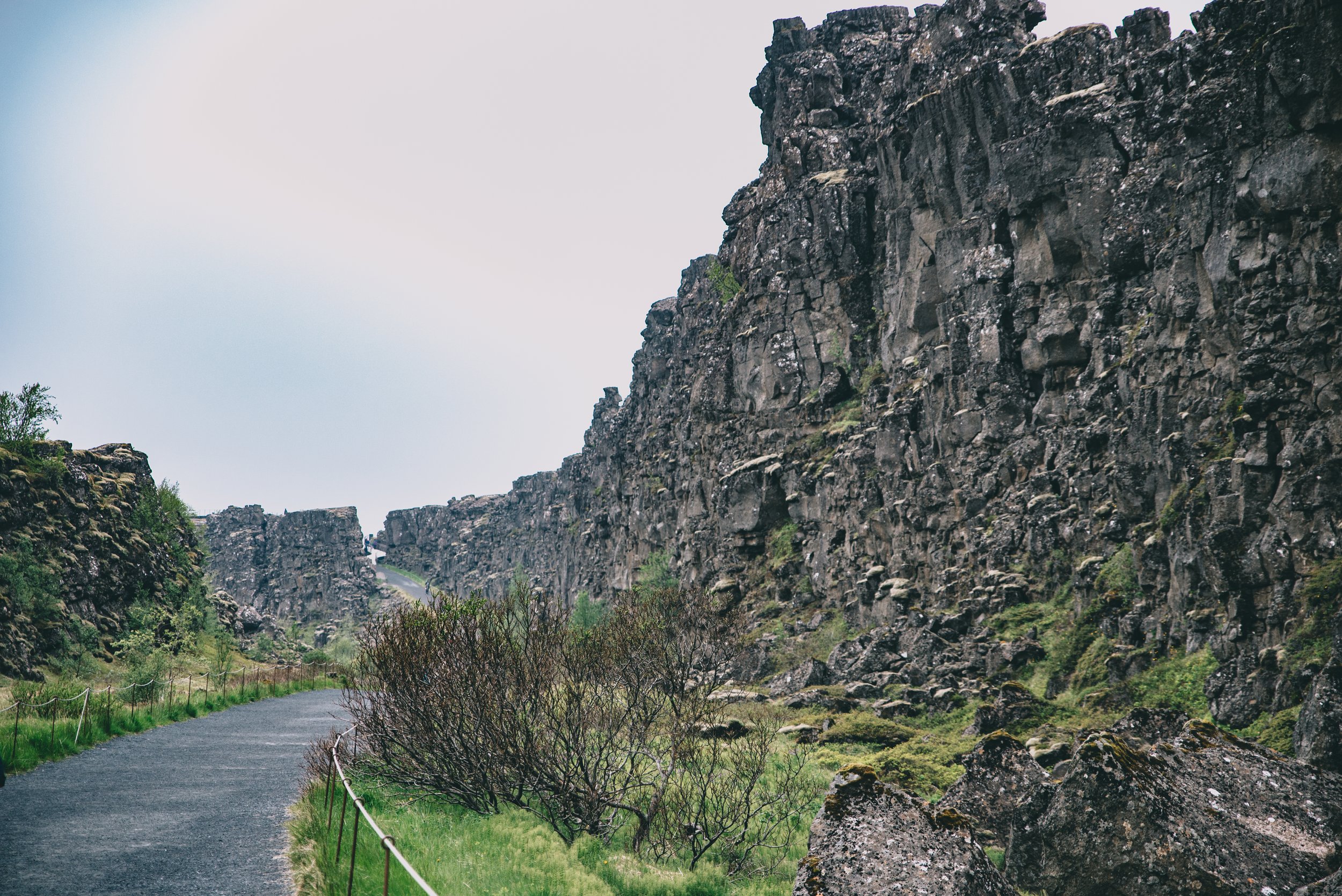
At Þingvellir, you can walk through the rift valley where the North American and Eurasian tectonic plates are gradually pulling apart.
Þingvellir National Park is one of Iceland’s UNESCO World Heritage sites. The area is an important cultural and geological site in Iceland. A continental divide cuts right through the park. The rift valley is caused by the separation of two tectonic plates, the North American and Eurasian, marking the crest of the Mid-Atlantic Ridge. Here is also where the country’s first parliament was located. For hundreds of years, from 930 to 1798, Icelanders would meet here to discuss laws and politics. You can just feel the history here. Now, the parliament is located within Alþingishúsið in Reykjavík.
When you arrive, there are several parking areas around Þingvellir. For a first visit, P1, near the visitor center, is the most convenient starting point for the main viewpoint and the walking path through Almannagjá. Parking is paid, and one payment covers the main visitor parking areas for the day. To the right of the building, there is a viewpoint I recommend stopping at before following the path down between the two continents. The path is very well maintained and easy to walk, with plenty of informational reading along the way.
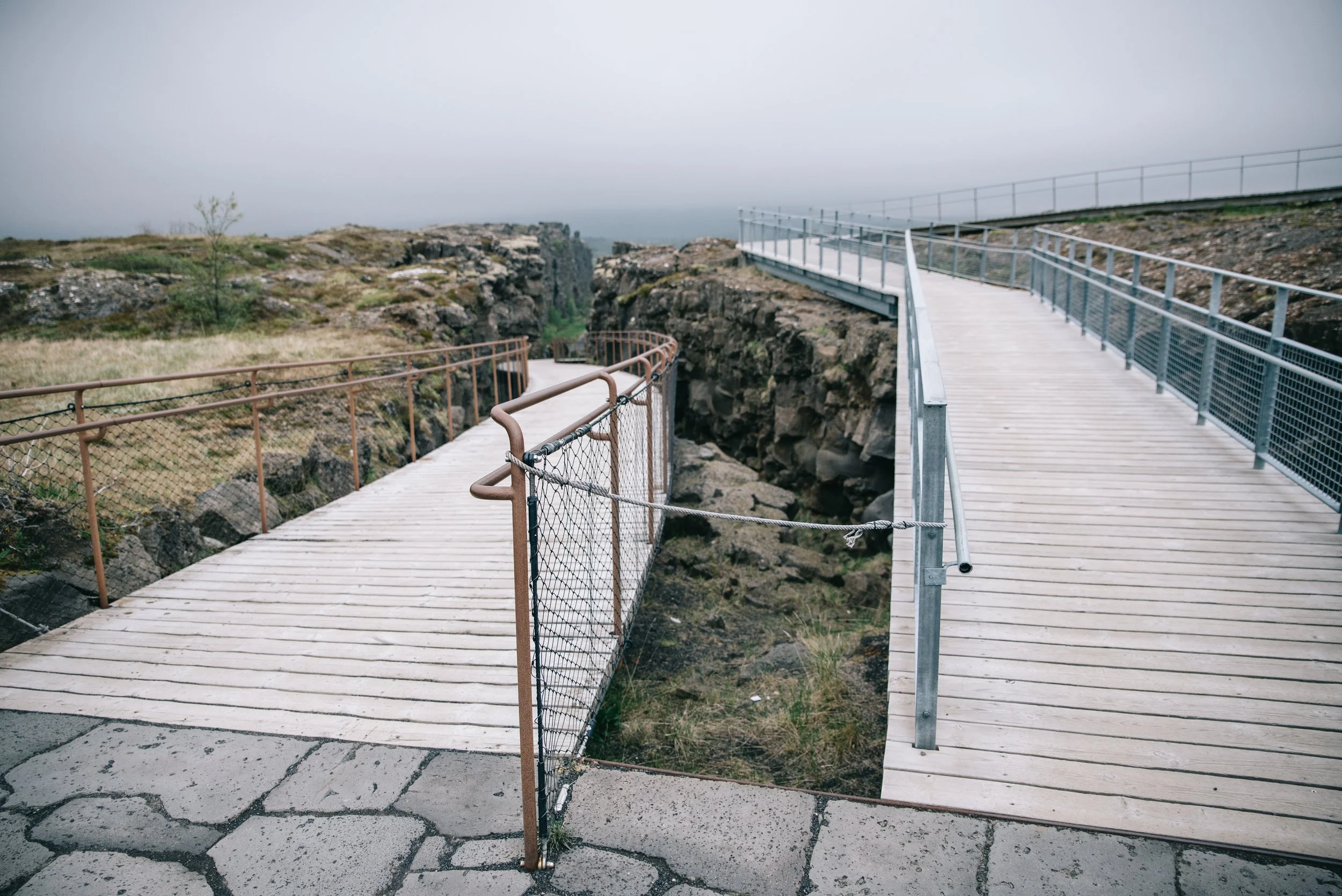
Look for this area, the right leads to the viewing platform and the left leads down between the valley
If you follow the path all the way down, you will see your first waterfall of the trip, Öxarárfoss. For anyone who is a Game of Thrones fan, there is a nearby rift in the rock that was used as a filming location. If you want to see the viewpoint, walk through Almannagjá and continue to Öxarárfoss without rushing, I would allow around 1 to 1.5 hours. If you are short on time, even a 30 to 45 minute stop lets you experience the main rift area and viewpoints.
Up for some adventure? An even cooler way to see the rifts is by snorkeling! There are tours that take you through the nearby Silfra Fissure. Very cold, but definitely an adventure worth doing. If you do not have time to do both, I would recommend picking one or the other. The snorkeling would probably take about 3 hours.
Geysir Geothermal Area
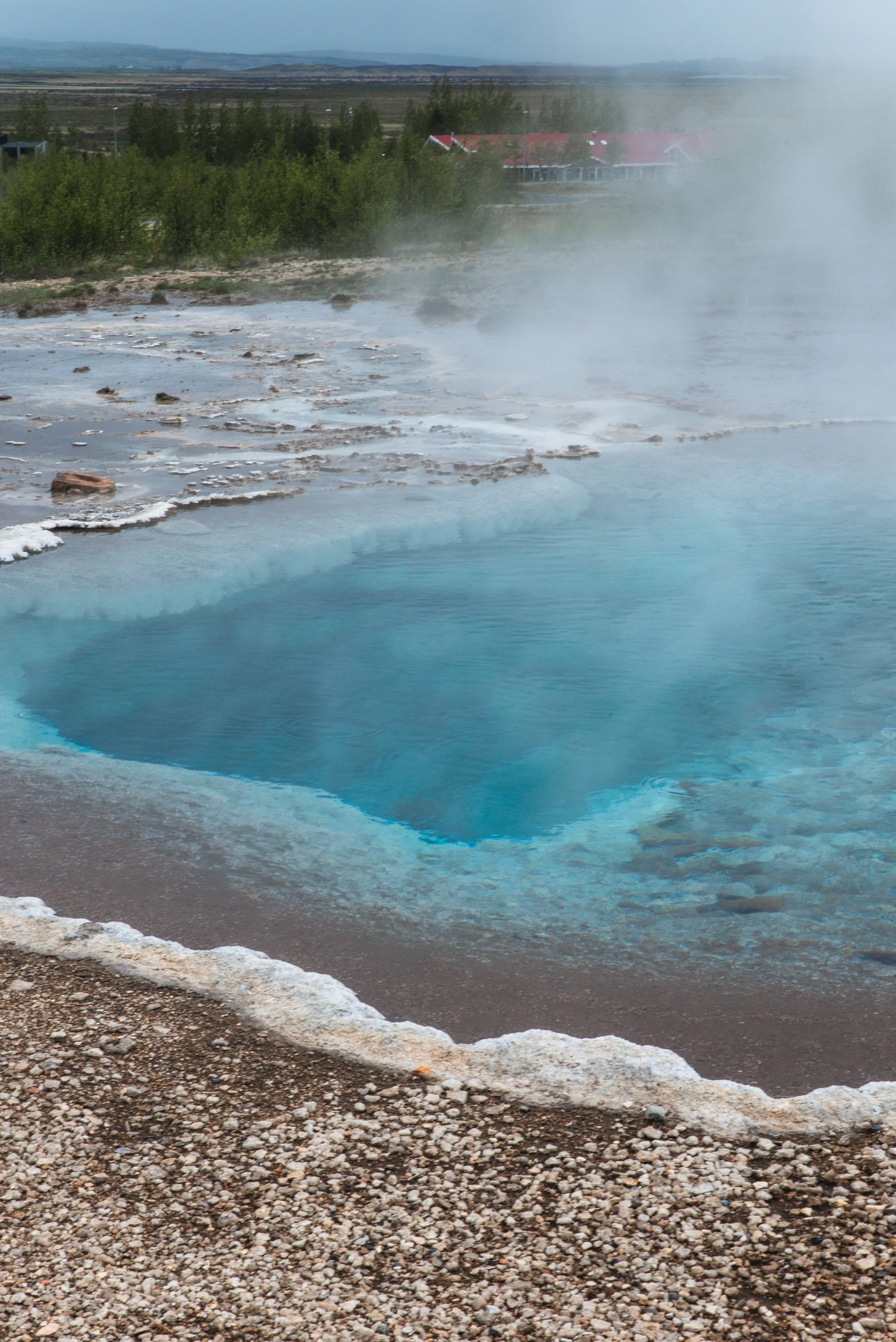
The Geysir Geothermal Area in Haukadalur Valley is one of the most popular stops along Iceland’s Golden Circle, and it is definitely one I would not skip. The geothermal area is filled with steaming vents, bubbling hot springs, colorful mineral deposits, and, of course, geysers.
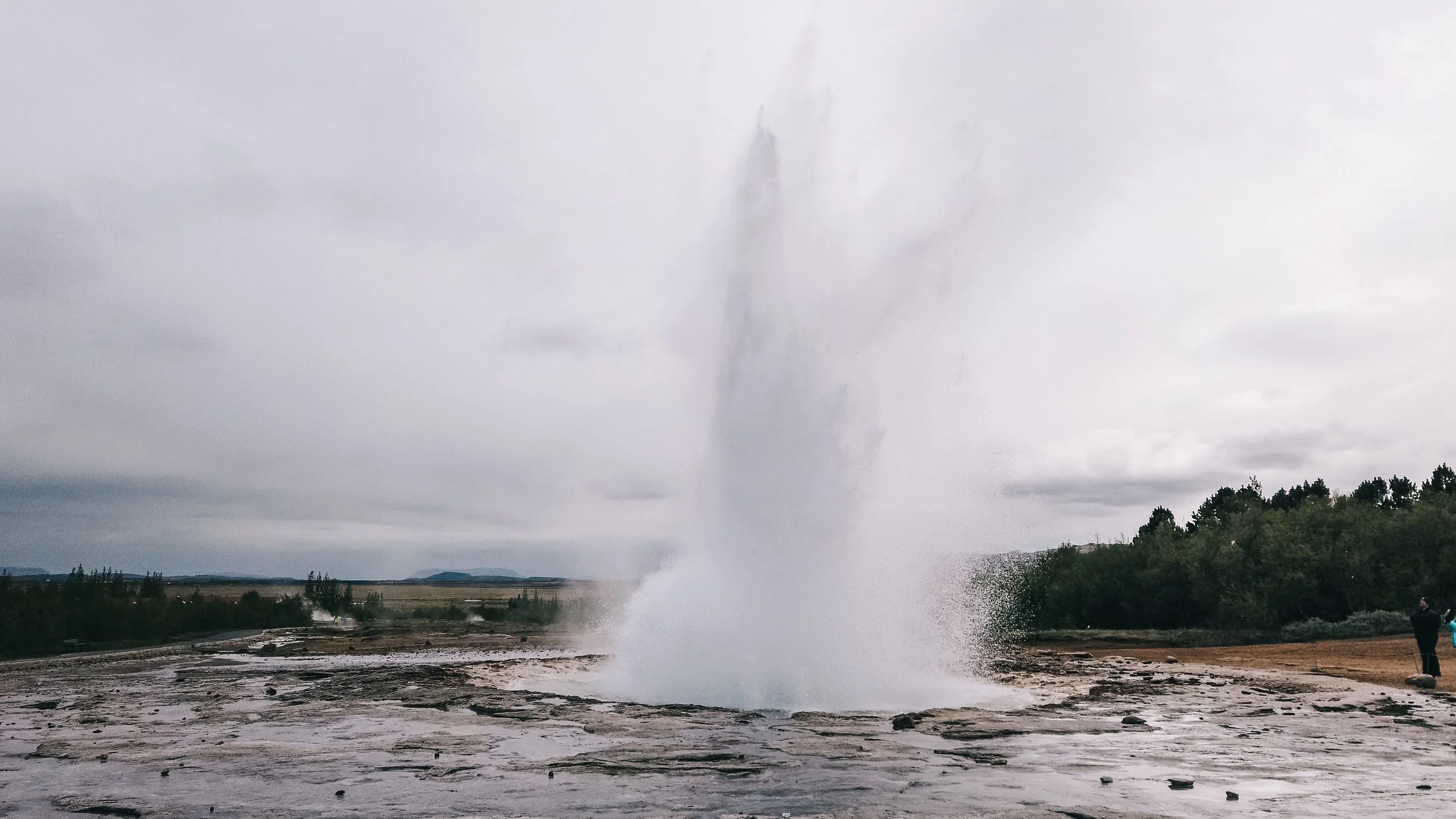
The area gets its name from Great Geysir, the famous hot spring that actually gave us the English word “geyser.” Great Geysir was once known for enormous eruptions, but today it is mostly inactive. The geyser you are most likely to see erupt is Strokkur, located nearby. Strokkur erupts roughly every 10 minutes, sometimes more frequently, and can send boiling water as high as about 30 meters, or nearly 100 feet, into the air.
When you arrive, there is a large parking area near the Geysir Center. The geothermal area itself is free to visit, but parking is now paid. For a standard passenger car, parking is currently about 1,000 ISK and can be paid through Parka. The parking area is open 24 hours a day.
Once inside the geothermal area, follow the marked paths toward Strokkur. You will pass steaming ground and smaller hot springs before reaching the main viewing area. Make sure to stay on the designated paths and behind the barriers. The water beneath the surface is extremely hot, even when the surrounding ground looks harmless.
How Much Time Should You Spend at Geysir?
I would allow 30 to 45 minutes for most visits. That gives you enough time to walk through the main geothermal area, see Strokkur erupt several times, and explore some of the surrounding hot springs without feeling rushed.
If you want to explore further, stop at the Geysir Center or walk toward the higher viewpoints around Laugarfjall, and give yourself about an hour.
What I’d Recommend
Do not leave after watching Strokkur erupt once.
The eruptions are not identical, and chances are you will be looking in the wrong direction, adjusting your camera, or simply not be ready the first time it happens. Since another eruption is usually only a few minutes away, stay for at least two or three.
If you are photographing it, watch the water closely just before the eruption. One of the coolest moments happens right before the water shoots upward, when the surface can swell into a blue bubble. Be ready, because it happens quickly.
For a Golden Circle road trip, I would consider Geysir one of the three must-do stops, along with Þingvellir and Gullfoss. It does not require a huge amount of time, it is unlike anything else you will see during the day, and there is really no reason to skip it.
Gullfoss
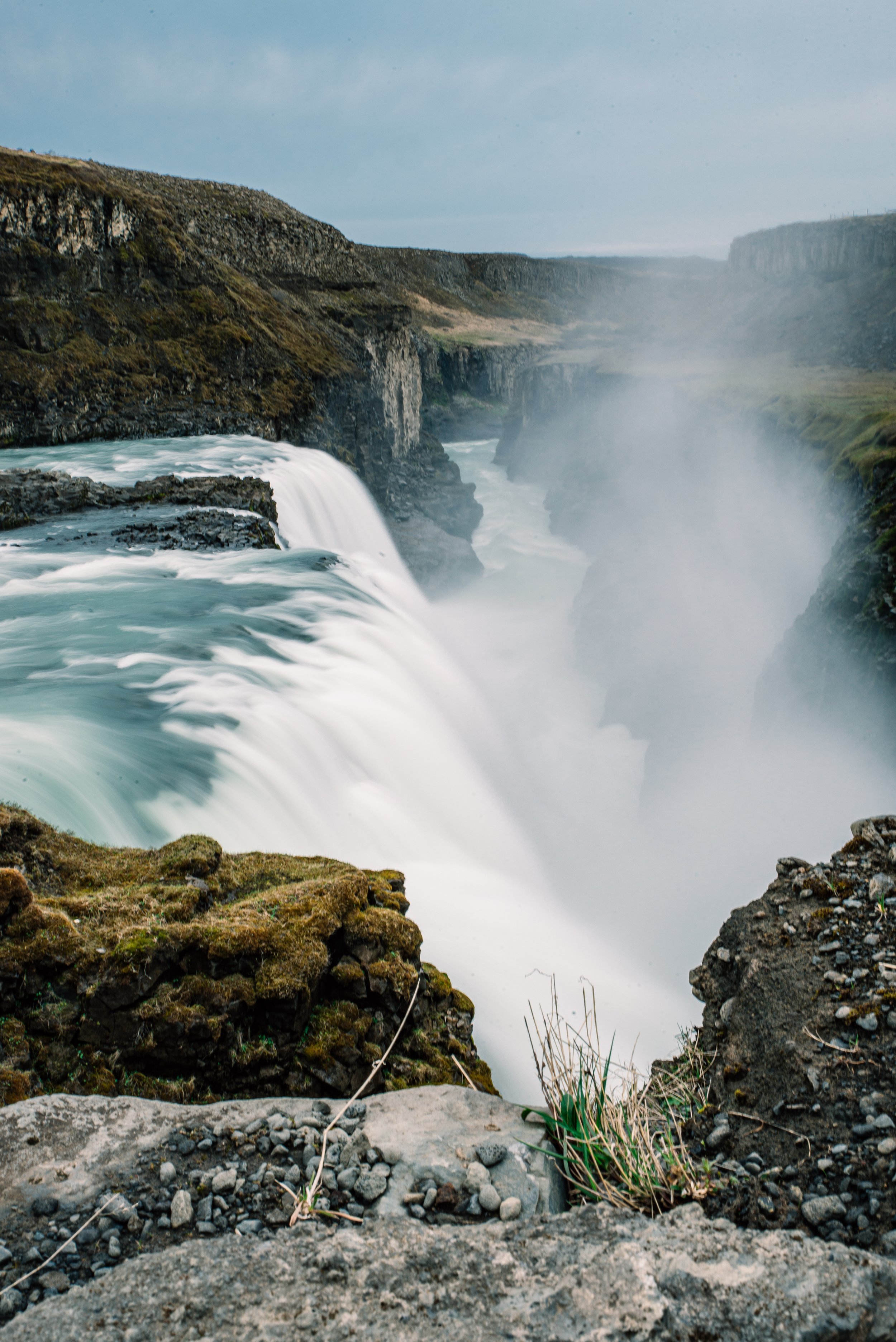
Next up is Gullfoss, or “Golden Falls,” one of the three major stops on the Golden Circle and easily one of the highlights of the entire route.
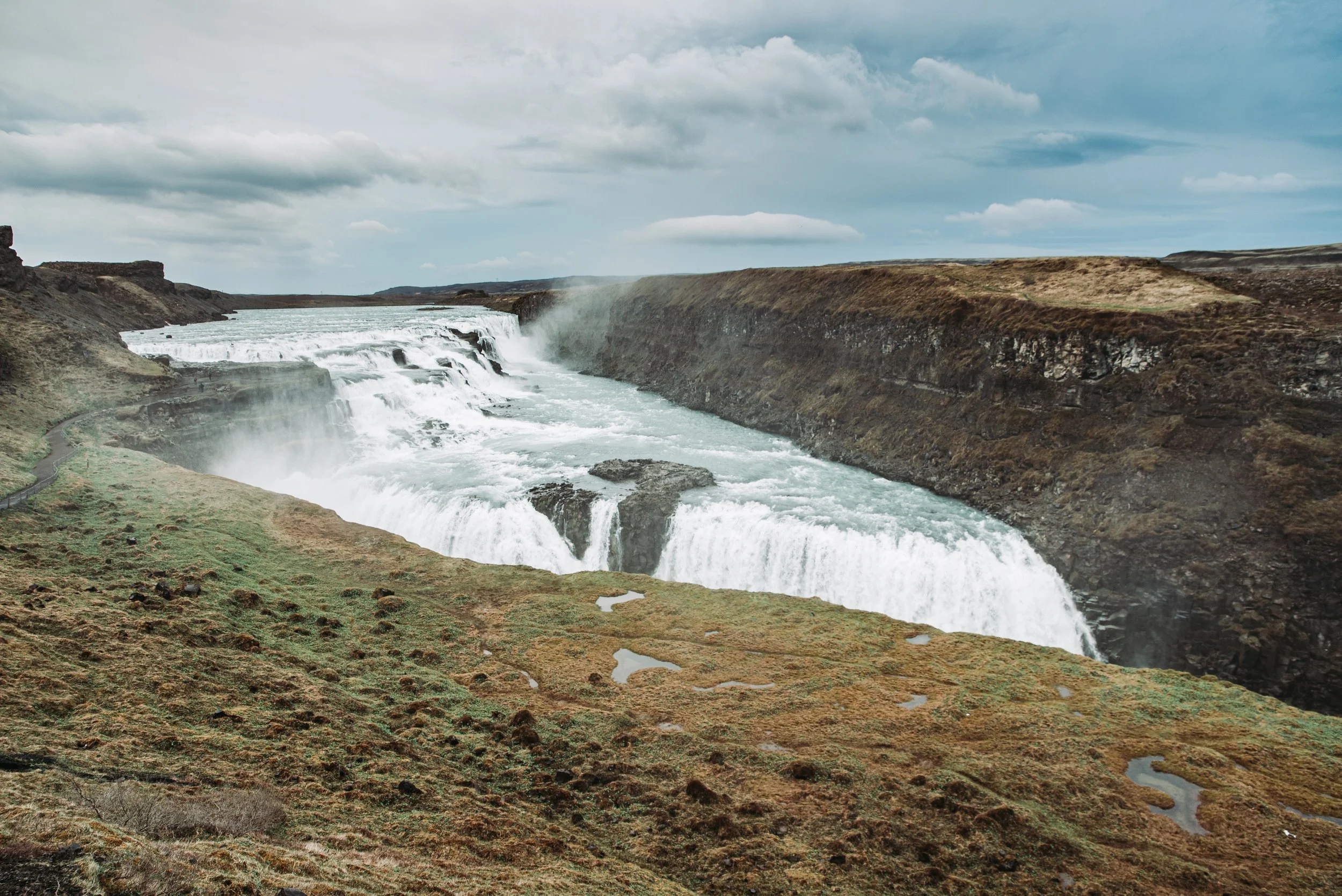
Gullfoss is located along the Hvítá River and drops in two stages before disappearing into a dramatic canyon below. The upper drop is about 11 meters, and the lower drop is about 21 meters. Between the sound of the water, the mist rising from the canyon, and the different viewpoints around the falls, this is one of those places that feels much more powerful in person than it looks in photos.
Gullfoss is free to visit, and parking is currently free as well. The main upper parking area is located near the visitor center, café, gift shop, and restrooms. From there, maintained paths lead toward the different viewpoints overlooking the waterfall.
One thing I recommend here is seeing Gullfoss from multiple viewpoints. The upper viewing areas give you a wider look at the entire waterfall and canyon, while the lower path gets you much closer to the falls and really lets you appreciate how powerful they are.
The lower path can close when conditions are icy or unsafe, particularly during winter, so do not be surprised if you cannot access every viewpoint during your visit. Always follow posted closures and check current conditions if you are visiting during colder months.
How Much Time Should You Spend at Gullfoss?
I would allow 45 to 60 minutes for Gullfoss.
That gives you enough time to walk between the main viewpoints, take photos, and actually enjoy the waterfall without feeling like you need to turn around and head back to the car immediately.
If you plan to stop inside the visitor center, grab something to eat, or spend extra time photographing the falls, give yourself closer to an hour and a half.
What I’d Recommend
If you are running ahead of schedule anywhere on the Golden Circle, this is one of the places where I would spend the extra time.
Do not just walk to the first viewpoint, take a photo, and leave. Seeing Gullfoss from both above and closer to the canyon gives you two very different perspectives.
If you are photographing the waterfall, bring something to wipe your lens. The amount of mist can be surprising, especially when you get closer to the falls.
And if you are trying to decide which Golden Circle stops are essential, Gullfoss is an easy yes. I would consider it one of the three stops you should absolutely make time for.
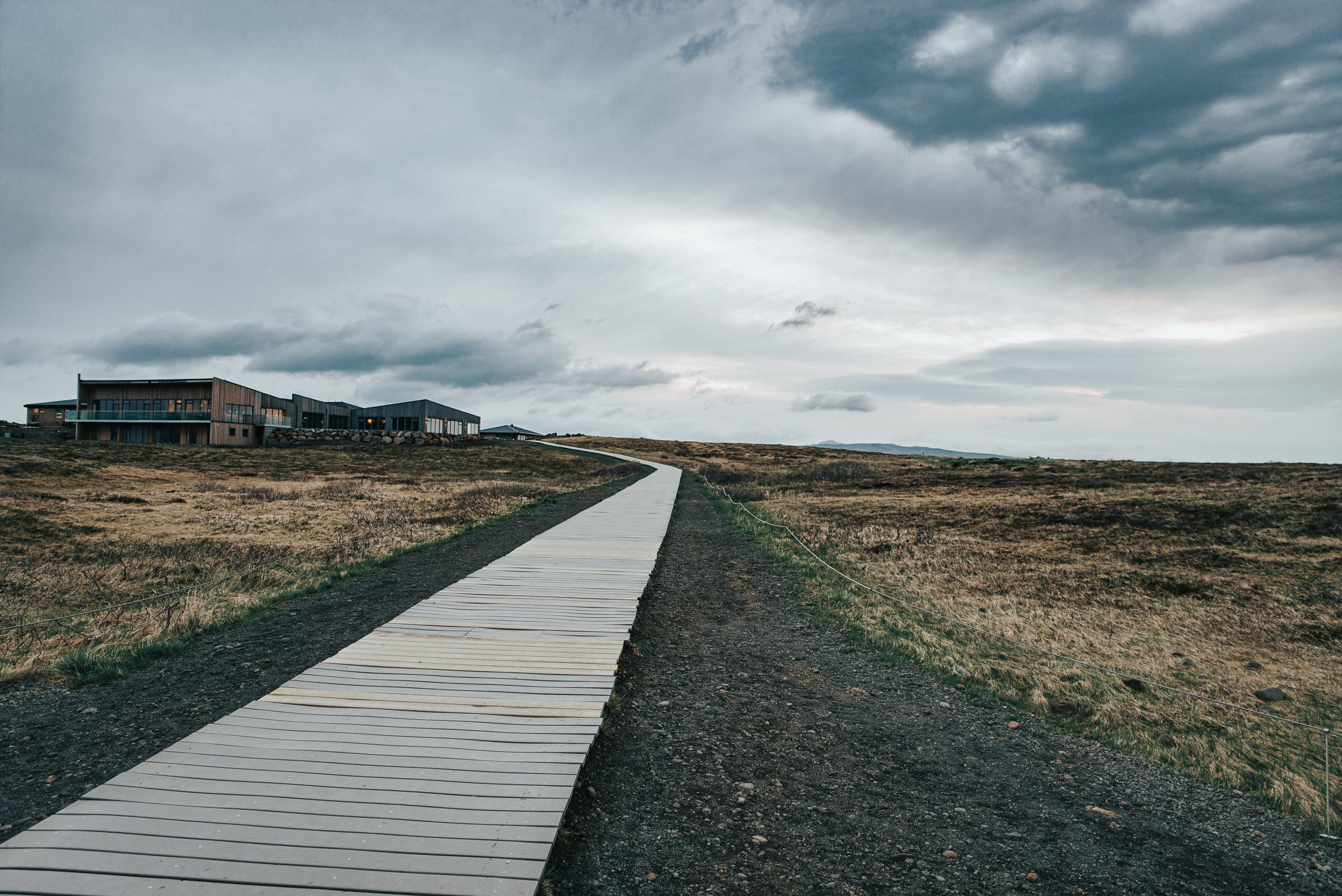
Path from the parking lot to the waterfall
Additional Sights
Faxifoss
If you have a little extra time during your Golden Circle drive, Faxi Waterfall, also called Faxafoss, is an easy bonus stop.
Faxi is much smaller and less dramatic than Gullfoss, but that is also part of what I liked about it. It is a wide, low waterfall on the Tungufljót River, and it tends to feel much quieter than the Golden Circle's major attractions. The waterfall is roughly 80 meters wide but only about 7 meters tall, creating a broad curtain of water rather than the powerful canyon drop you see at Gullfoss. There is also a fish ladder beside the waterfall that helps salmon travel upstream.
When I visited, one of the things I liked most about Faxi was how easy it was to see. You do not need to commit to a long hike. The parking area is close to the waterfall, and a short walk leads to viewpoints overlooking the falls.
The waterfall itself is free to visit, but there is currently a parking fee of around 900 ISK per vehicle. Because parking fees can change, I would still check the posted rate when you arrive.
Note: If you are using Google Maps and have trouble finding it, try searching for Faxi, Faxafoss, or Faxi Waterfall.
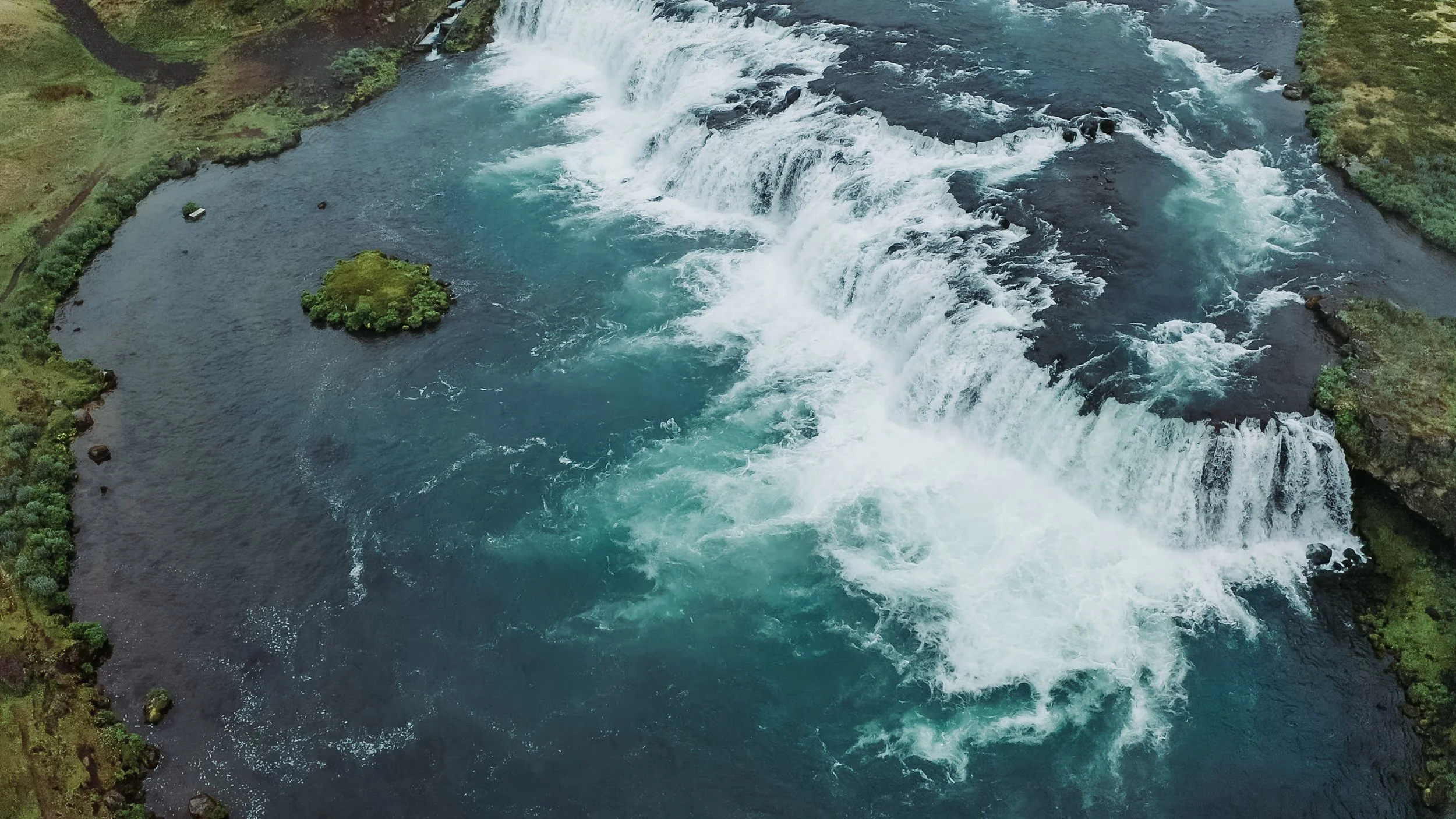
How Much Time Should You Spend at Faxi?
For most people, 20 to 30 minutes is plenty. You can see the waterfall from the main viewing area, walk around a little, take some photos, and continue on your Golden Circle route without losing much time.
If you want a quiet break or somewhere to slow down for a little while, you could easily stay longer.
What I’d Recommend
I like Faxi, but I would consider it a bonus stop rather than a must-see. If you have the time, it is worth adding because it is peaceful, easy to reach, and feels different from the much busier major Golden Circle attractions.
But if your day is running behind, this would be the first stop I would skip. You are already going to see Gullfoss, which is significantly more dramatic. I would rather give yourself enough time at Þingvellir, Geysir, and Gullfoss than rush through those three just to fit Faxi into the day.
If your schedule is comfortable, though, it is a really nice little detour.
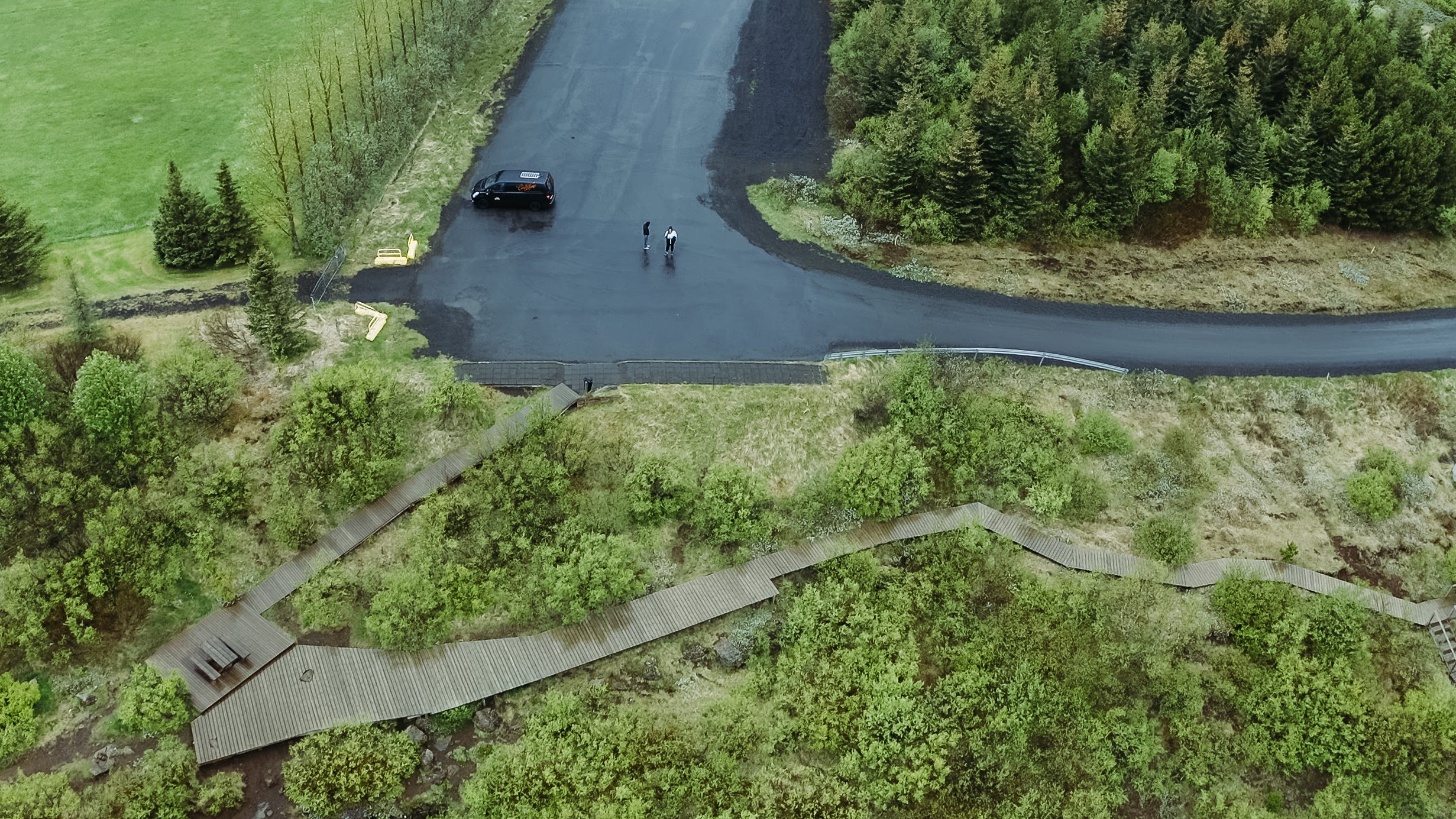
Parking lot and path/viewing platform
Kerið (Kerid) Crater
Kerið Crater is one of my favorite bonus stops on the Golden Circle because it offers something completely different from the waterfalls, geothermal areas, and historic landscapes you have been seeing throughout the day.
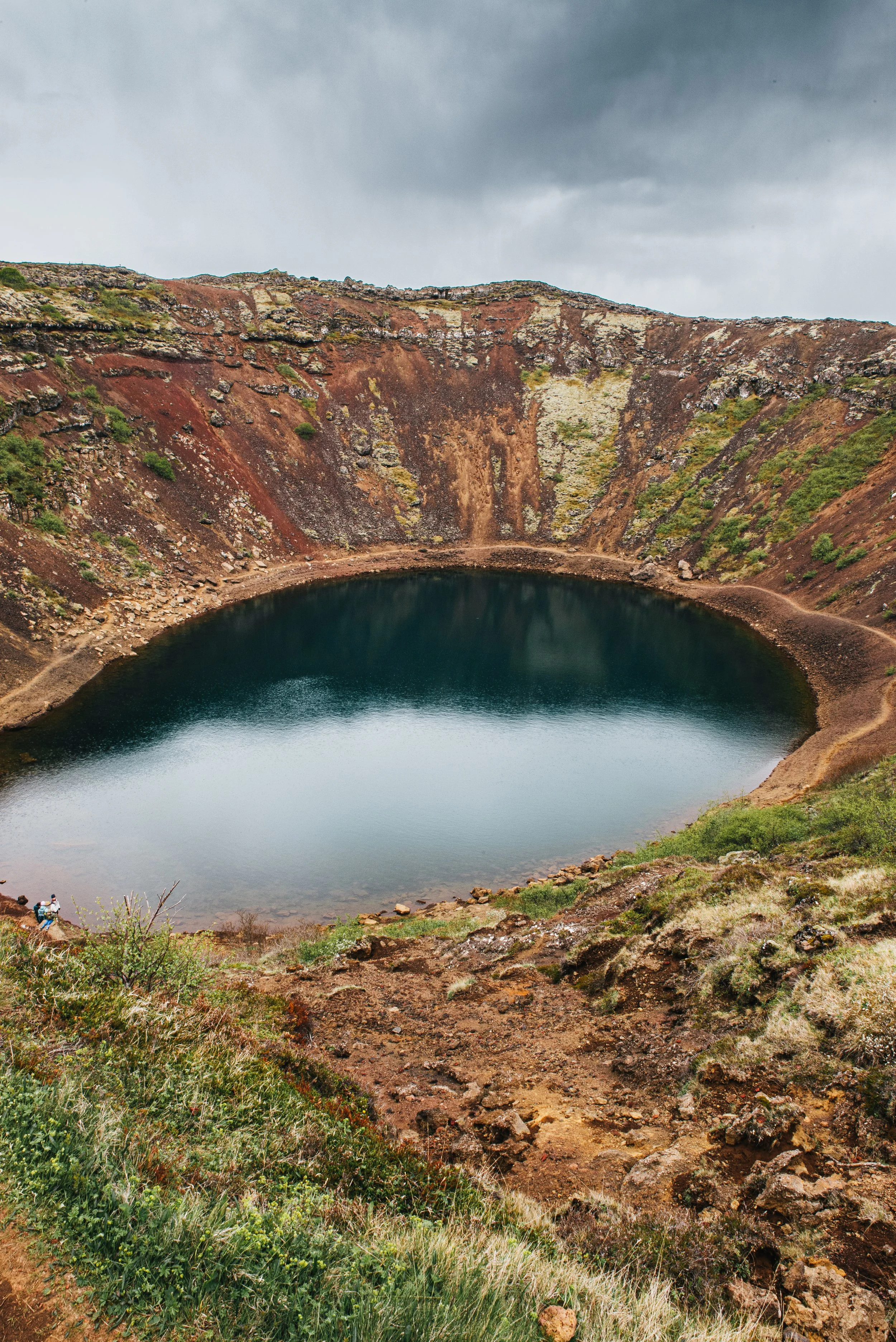
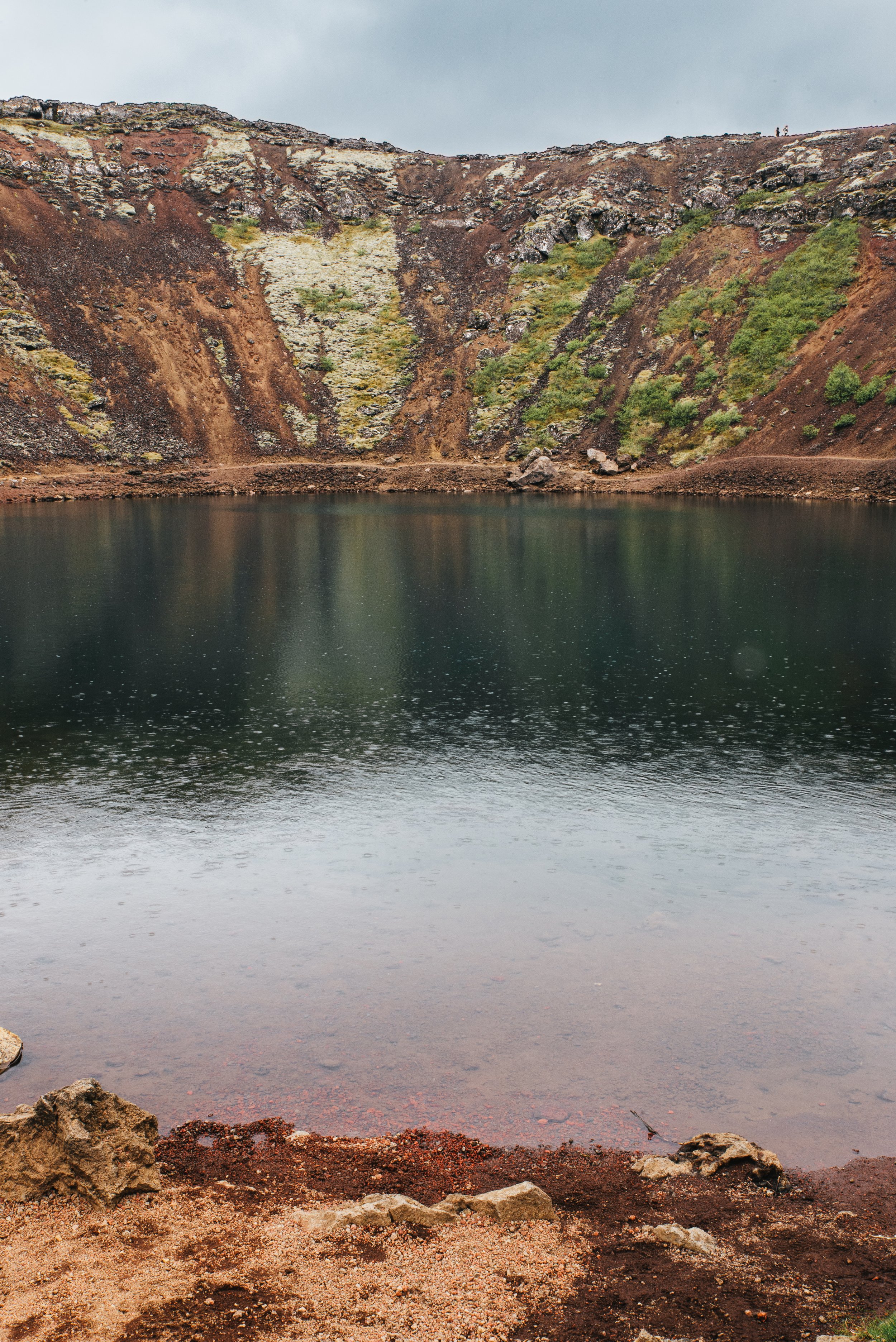
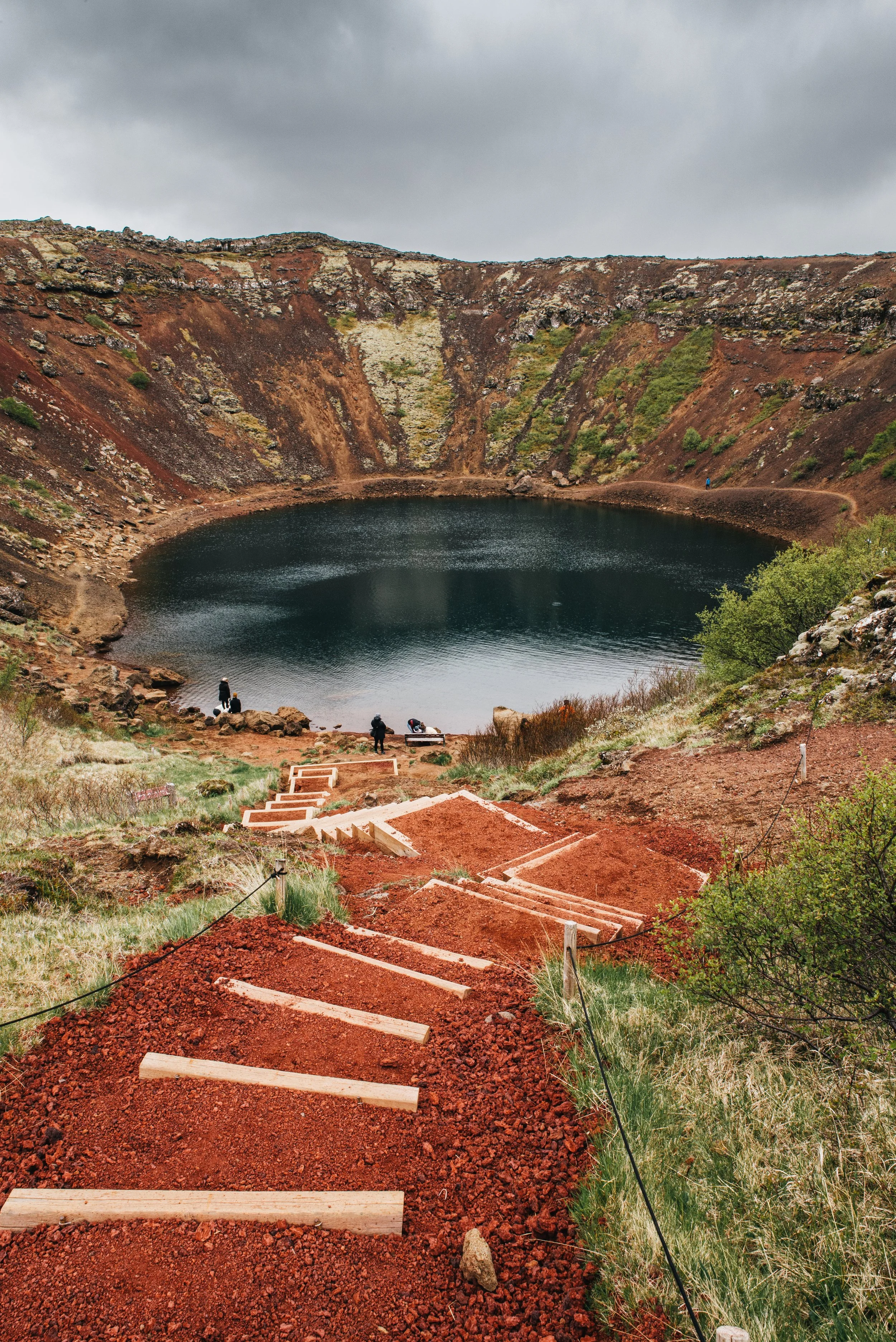
Kerið is a volcanic crater filled with a blue-green lake and surrounded by colorful volcanic rock. Depending on the season and weather, you can see shades of red, orange, brown, green, and black along the crater walls surrounding the water. The crater is about 55 meters deep, 170 meters wide, and 270 meters across. Interestingly, Kerið was not formed by a giant volcanic explosion. Instead, the volcano erupted, emptying its magma reservoir and causing the overlying cone to collapse into the resulting void. The crater was later filled with groundwater, creating the lake you see today.
Kerið is privately owned, so unlike most of the natural attractions along the Golden Circle, there is an admission fee. The current entrance fee is 700 ISK per person, and parking is included. Once you enter, you can immediately walk to viewpoints along the rim for a look down into the crater. There is also a path that takes you down toward the lake, so you can see Kerið from both above and below.
I think it is worth doing both if you have the time. The view from the rim showcases the crater's colors and shape, while walking down to the water offers a completely different perspective.
How Much Time Should You Spend at Kerið?
If you just want to stop at the main viewpoint and take a few photos, you could see Kerið in about 15 to 20 minutes.
I would personally allow 30 to 45 minutes so you have enough time to walk along part of the rim and head down toward the lake without rushing.
You do not need to make this a long stop, which is one reason it works so well as an addition.
What I’d Recommend
I would add Kerið if your route naturally passes by it. It is especially convenient if you are completing the Golden Circle loop toward Selfoss or continuing farther into South Iceland.
Unlike Faxi, I would be more reluctant to cut Kerið from the itinerary if you have enough time. By this point in the day, you have already seen several waterfalls and geothermal attractions. Kerið introduces an entirely different volcanic landscape, so it does not feel repetitive.
If you are extremely short on time, the view from the top alone is enough to make the stop worthwhile. But if you have another 15 or 20 minutes, walk down toward the lake too.
Continue Planning Your Iceland Trip
3 Day Iceland Road Trip
Iceland South Coast Guide
How Much Does an Iceland Trip Cost?
Iceland's Many Hot Springs and Pools
Now go enjoy your trip!

Planning to drive Iceland’s Golden Circle? This detailed self-drive guide covers Þingvellir, Geysir, Gullfoss, Faxi, and Kerið, with realistic driving times, parking costs, how long to spend at each stop, and which stops are actually worth your time.